Rugby Free Bets UK: Every Sign-Up Offer, Bonus Type and Wagering Requirement Explained
 Available in US

I have claimed every meaningful rugby free bet offered by a UKGC-licensed bookmaker over the past six years. I keep a spreadsheet. The headline values – “Get 30 pounds in free bets!” – bear almost no relationship to what you actually walk away with after navigating the wagering requirements, minimum odds restrictions and expiry windows that every offer comes wrapped in. That gap between the advertised value and the effective value is the entire subject of this article.
Sports betting accounts for 57.1% of total UK online gambling revenue, and free bets are the primary tool operators use to acquire new customers in that market. The UK betting industry employs over 91,000 people across 914 companies, and every one of those operators competes for your first deposit through some form of welcome offer. The question is not whether free bets exist – they are everywhere – but whether any given offer is worth the terms attached to it.
What follows is a practical breakdown of how rugby free bets work in 2026, what the different bonus types actually deliver after wagering, and how the recent tax changes are quietly reshaping what operators can afford to give away.
Table of Contents
- Types of Rugby Betting Bonuses: Free Bets, Deposit Matches and Risk-Free Wagers
- Current Rugby Free Bet Offers from UKGC-Licensed Bookmakers
- Wagering Requirements and Terms: What the Fine Print Means
- Step-by-Step: How to Claim and Use a Rugby Free Bet
- Seasonal Promotions: Six Nations, World Cup and Premiership Offers
- Frequently Asked Questions
Types of Rugby Betting Bonuses: Free Bets, Deposit Matches and Risk-Free Wagers
The phrase “free bet” gets used loosely, but there are at least four distinct bonus structures in the UK market, and each one works differently in practice. Confusing them costs money.
A stake-not-returned free bet is the most common type. You receive a token – say, 10 pounds – that you can place on any qualifying market. If the bet wins, you receive the profit but not the original stake. So a 10-pound free bet placed at odds of 3.00 returns 20 pounds (the 30-pound payout minus the 10-pound stake that was never real money). The effective value of this type of free bet is roughly 50-70% of its face value, depending on the odds you use it at. Higher odds increase the expected return but reduce the probability of winning.
A deposit-match bonus credits your account with bonus funds equal to a percentage of your first deposit – typically 50% or 100%. A 100% match on a 20-pound deposit gives you 20 pounds in bonus funds. The catch is the wagering requirement: you must bet the bonus amount a specified number of times (usually 3x to 6x) at minimum odds before you can withdraw any winnings derived from it. A 20-pound bonus with 5x wagering at minimum odds of 1.50 means placing 100 pounds worth of qualifying bets before the bonus converts to withdrawable cash. The effective value after that grind is typically 30-40% of the face amount.
A risk-free bet refunds your stake as a free bet token if your first wager loses. Place a 25-pound bet, it loses, you get a 25-pound free bet back. This sounds generous until you calculate the expected value: you are essentially getting a free bet (worth 50-70% of face value) conditional on your first bet losing. The net expected value is lower than a straight free bet of the same amount, because you only receive the bonus in the losing scenario.
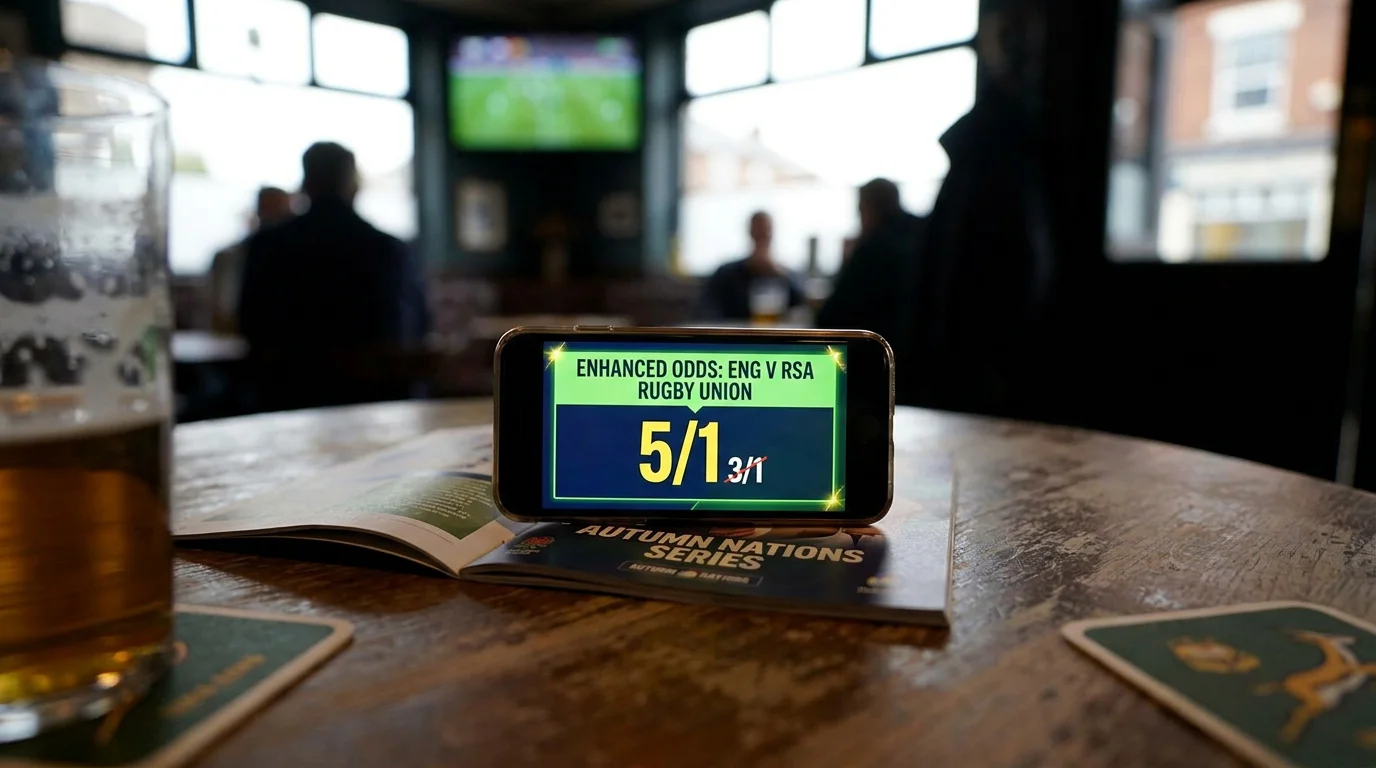
Enhanced odds offers inflate the price on a specific selection – “England to beat France at 6.00 instead of 1.80” – with the enhanced portion paid as a free bet rather than cash. These are marketing tools designed to attract attention during major fixtures. The inflated odds apply to a capped stake (usually 1 to 5 pounds), and the winnings above the standard price are credited as free-bet tokens with their own wagering conditions. Neal Menashe, CEO of Super Group, made a pointed observation when the 2026 tax changes were announced: his company supports reasonable taxation but relies on the government to ensure strict enforcement against non-paying offshore operators. That comment hints at the pressure legitimate operators face to maintain attractive offers while absorbing higher costs – a tension that directly affects the generosity of these enhanced-odds promotions.
Since October 2025, every UKGC-licensed operator must offer customers the option to set a financial limit before their first deposit. This regulatory change means your very first interaction with a free-bet offer now includes a moment to decide how much you are comfortable depositing, which is a structurally positive development for anyone who has ever been tempted to deposit more than intended in order to maximise a welcome bonus.
Current Rugby Free Bet Offers from UKGC-Licensed Bookmakers
Rather than listing specific offers that will be outdated by the time you read this, I want to explain how to evaluate any rugby free bet you encounter. The offers change weekly – sometimes daily during peak rugby windows – but the evaluation framework stays the same.
Start with the effective value calculation. Take the face value of the free bet, estimate the probability-weighted return based on the minimum qualifying odds, and subtract the cost of meeting any wagering requirements. For a 20-pound stake-not-returned free bet used at odds of 2.50, the expected return is roughly 12 pounds (20 multiplied by the implied probability of winning at 2.50, multiplied by the profit per pound wagered). That 12 pounds is the realistic value of the offer – not the 20 pounds advertised.
Next, check the minimum odds requirement. Most free bets stipulate a minimum price – often 1.50 or 2.00 – for the qualifying bet or the free-bet usage. If the minimum is 2.00 and you would normally bet at 1.50 on a rugby handicap, the offer is forcing you into a less familiar odds range, which changes your edge. Some bettors chase higher odds purely to meet the requirement, which is precisely the behaviour the operator is hoping for.
Expiry windows matter more than most people realise. A 30-pound free bet that expires in seven days is worth less than a 20-pound free bet that expires in 30 days, because the shorter window forces you to use it on whatever rugby fixtures happen to be available that week – even if none of them offer genuine value. I have let free bets expire rather than force a bet on a fixture I had no view on, and I consider that the correct decision every time. A free bet used on a bad wager is not free; it is a waste of analysis time and emotional energy.
Market restrictions are the final filter. Some offers exclude certain bet types – accumulators only, singles only, specific sports, or minimum-leg requirements for multiples. A “rugby free bet” that can only be used on accumulators with three or more legs at minimum odds of 1.50 per leg is a fundamentally different product from one that can be used on a single rugby match-result bet. The former pushes you toward higher-variance, lower-expected-value bets; the latter lets you apply it to whatever you consider the strongest opportunity.
The UK betting market is valued at 17.2 billion pounds for 2025-26, and operators compete for market share through welcome offers as aggressively as through odds quality or product features. That competition is good for bettors in aggregate, but only if you evaluate each offer on its effective value rather than its headline number. The operator wants you to see “30 pounds free” and feel excited. Your job is to see “roughly 15 pounds of real value after terms” and decide whether that is worth the registration process.
Wagering Requirements and Terms: What the Fine Print Means
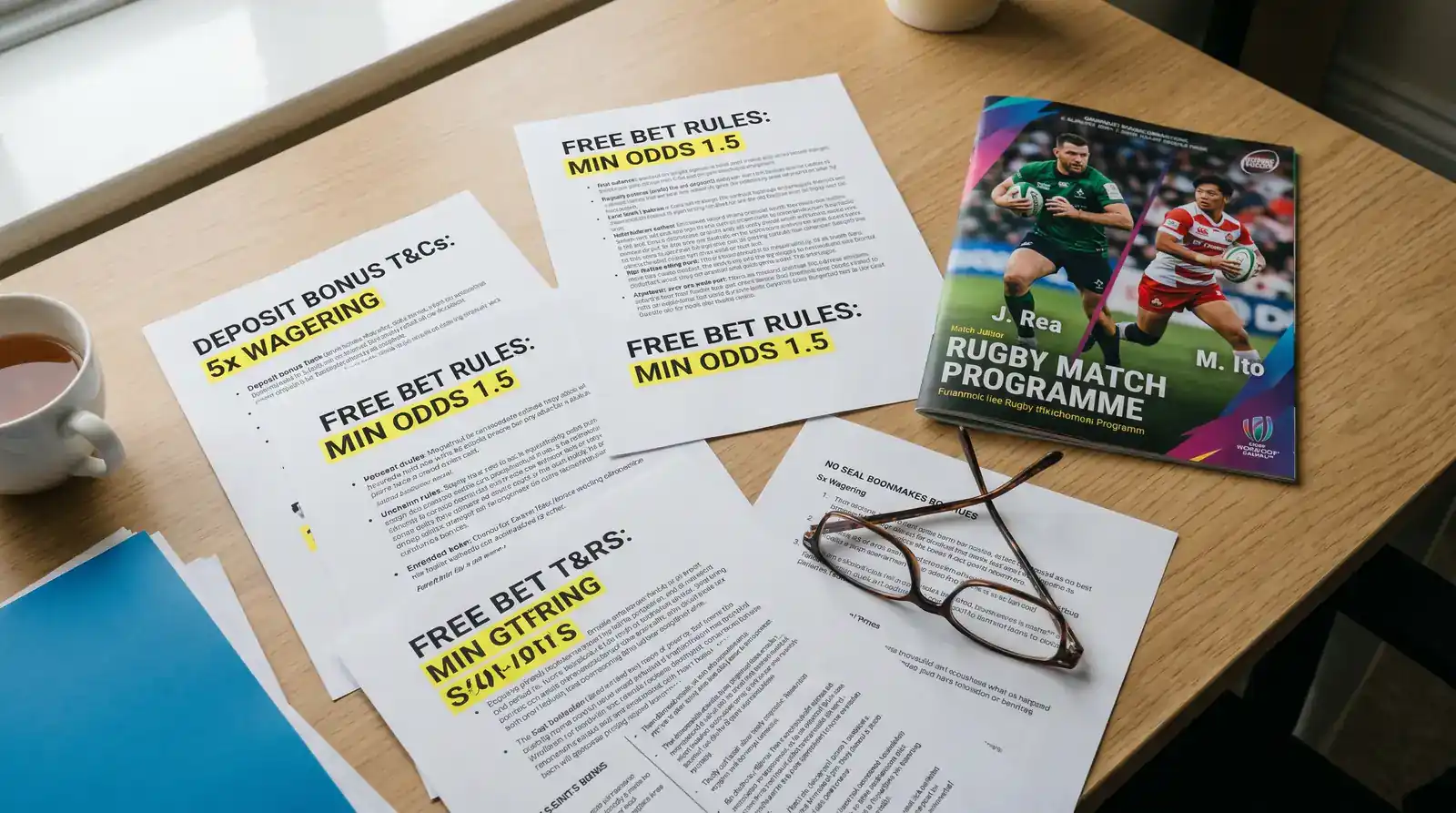
Wagering requirements are where operators recover the cost of free bets, and understanding the mechanics is non-negotiable if you want to extract real value from any bonus. The concept is simple – you must bet a specified multiple of the bonus before withdrawing – but the implementation contains details that change the economics entirely.
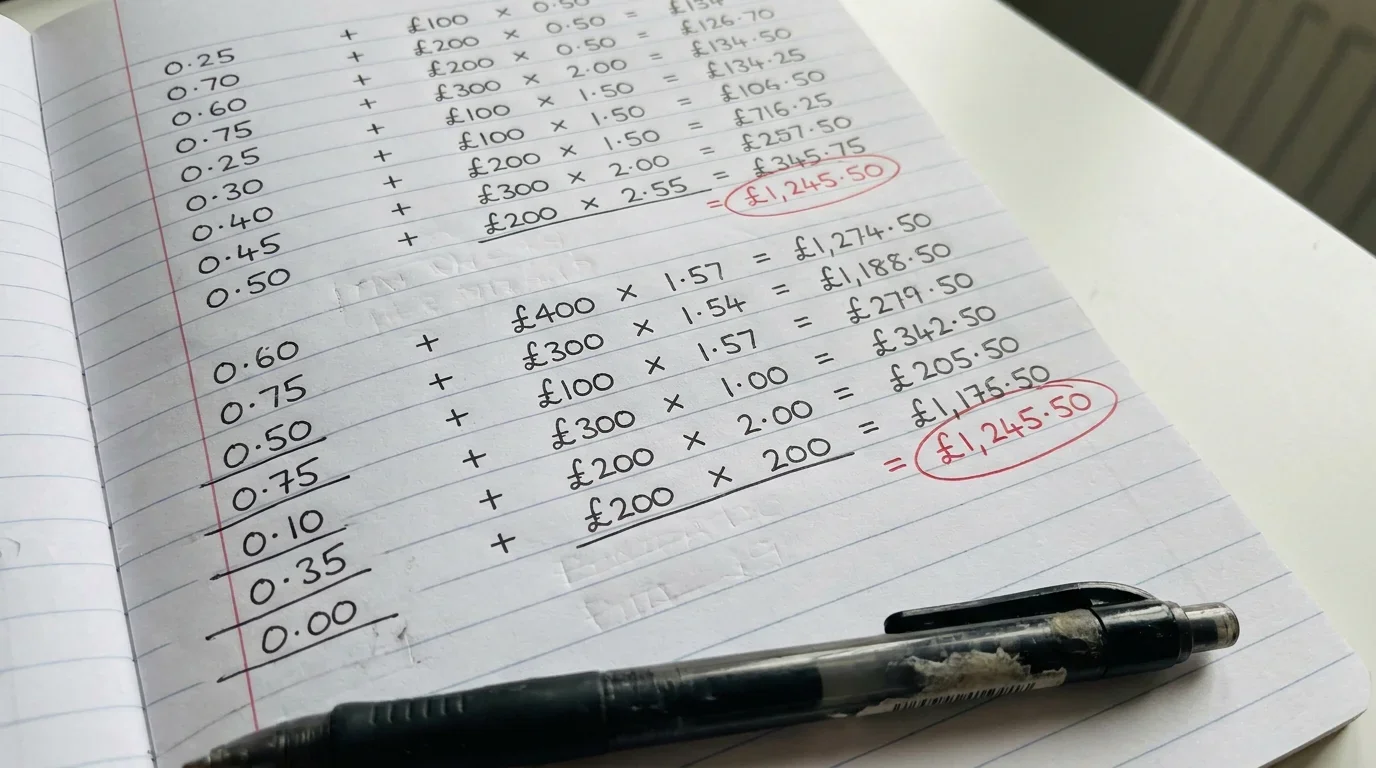
A 3x wagering requirement on a 20-pound bonus means placing 60 pounds in total qualifying bets. At minimum odds of 1.50 and assuming a roughly break-even strike rate, you will cycle through that 60 pounds losing a small amount to the bookmaker’s margin on each bet. The cumulative margin cost is the hidden price of the bonus. On a 60-pound turnover requirement at markets with a 5% overround, you are paying approximately 3 pounds in expected margin drag – which reduces your effective bonus value from 20 pounds to something closer to 10-11 pounds after the full cycle.
The multiplier matters enormously. A 3x requirement is manageable; a 10x requirement on the same 20-pound bonus requires 200 pounds in turnover, and the margin cost eats the majority of the bonus value. I consider anything above 6x to be poor value for a standard free bet, and anything above 10x to be effectively worthless unless the underlying odds you are getting on each qualifying bet offer genuine value independent of the bonus.
Qualifying-bet restrictions tighten the screws further. Some wagering requirements only count bets placed at odds above a specified threshold, or only count bets on certain markets. If your normal rugby betting involves handicaps at 1.85 and the minimum qualifying odds are 2.00, every bet you place to meet the requirement pushes you slightly outside your comfort zone. The cumulative effect is a lower strike rate than your normal betting would produce, which compounds the margin cost.
Time limits on wagering completion add pressure. If you have 30 days to meet a 5x requirement, you can wait for fixtures you have strong views on. If you have 7 days, you are forced to bet on whatever is available, which almost certainly means placing wagers without your usual analytical edge. Short deadlines benefit the operator because they induce lower-quality betting decisions.

How the 2026 Tax Rise Could Reshape Bonus Generosity
In April 2026, the Remote Gaming Duty rose from 21% to 40%. A new remote betting duty of 25% takes effect in April 2027, replacing the current 15% rate. These are not abstract numbers – they represent the single largest cost increase the UK gambling industry has faced in decades, and the government’s own analysis projects that operators will pass up to 90% of the increase through to consumers via reduced payouts or tighter terms.
For free bets specifically, the tax rise creates a direct squeeze. Every free bet an operator issues is a cost that must be recovered through the customer’s subsequent betting activity. When the tax rate nearly doubles, the cost of acquisition rises and the margin available to fund it shrinks. The logical response – already visible across the industry – is a combination of lower face values on welcome offers, higher wagering requirements, shorter expiry windows and stricter qualifying conditions.
A 30-pound free bet that was standard in 2024 becomes a 20-pound free bet in 2026, with the same or tighter terms. A 50% deposit match becomes a 25% match. Enhanced odds promotions run for fewer fixtures and at lower maximum stakes. These adjustments are not speculation – they are already happening, and the 2027 duty increase will compress things further.
The government expects these tax changes to generate 1.1 billion pounds by 2029-30. That money comes from operators, who in turn take it from customers. As a rugby bettor evaluating free bets, the practical implication is straightforward: offers in 2026 are less generous than offers in 2024, and offers in 2027 will be less generous still. Adjust your expectations accordingly, and focus your energy on the offers that survive the squeeze – which will tend to be the ones attached to the operators with the strongest margins and the most efficient customer-acquisition models.

Step-by-Step: How to Claim and Use a Rugby Free Bet
The mechanics of claiming a free bet follow the same general sequence across every UKGC-licensed operator, but the details at each step can trip you up if you are not paying attention.
Registration comes first. You will need to provide your name, address, date of birth and contact details, then verify your identity through document upload – typically a passport or driving licence and a recent utility bill or bank statement. This KYC (know your customer) process is a legal requirement, not an optional step, and it must be completed before you can deposit, bet or access any bonus. Some operators allow you to complete KYC after registration but before your first withdrawal; others require it upfront. Completing it immediately avoids delays when you want to withdraw winnings later.
The deposit step is where the financial-limit requirement introduced in October 2025 comes into play. You will be asked to set a deposit limit – daily, weekly or monthly – before your first deposit goes through. Set this at a level you are genuinely comfortable with, not at the maximum the interface allows. Operators design their deposit flows to encourage larger amounts, and the welcome bonus itself can create a psychological pull to deposit more than you intended in order to maximise the match. Your limit is your guardrail against that pull.
Qualifying bets must meet specific conditions: minimum stake, minimum odds, sometimes a specific market type. Read these conditions before placing the qualifying bet – not after. I have seen bettors place a 10-pound qualifying bet at 1.40, only to discover the minimum odds were 1.50, which means the bet does not trigger the free-bet release. The qualifying stake is real money at risk, so place it on a market where you have a genuine view rather than treating it as a throwaway.
Free-bet tokens typically appear in your account within minutes of the qualifying bet settling, though some offers specify a delay of up to 24 hours. Use the free bet on a market you have already identified rather than rushing to spend it the moment it arrives. The expiry window gives you time – use that time to find the highest-value application rather than the first available one.

Seasonal Promotions: Six Nations, World Cup and Premiership Offers
Free bets and promotions follow the rugby calendar with predictable peaks and troughs. Understanding the cycle lets you time your sign-ups and bonus claims for maximum value.
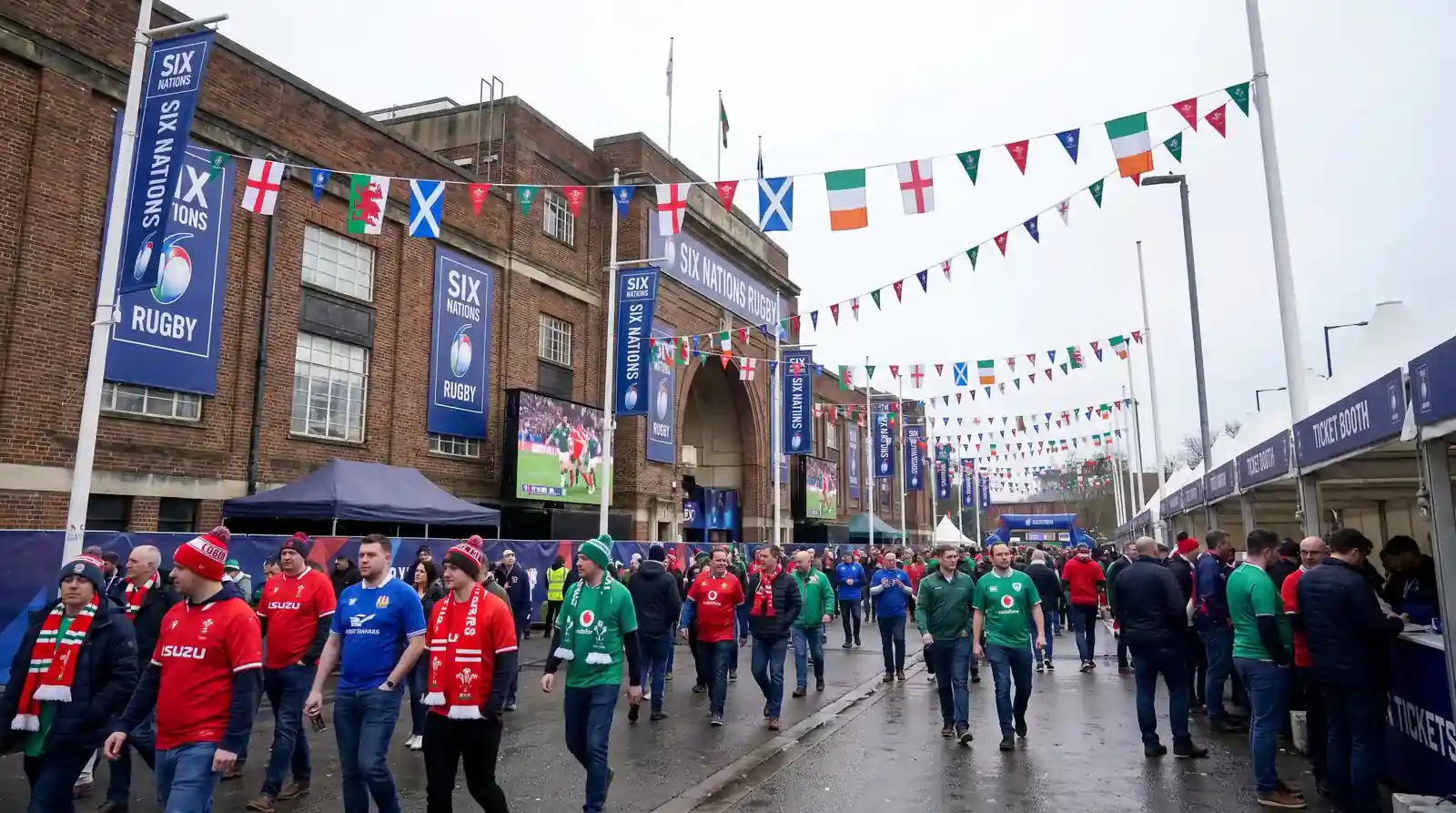
The Six Nations window in February and March is the single richest period for rugby-specific promotions. Operators compete aggressively for the casual bettor who watches the tournament and wants to place a few wagers. Enhanced odds on opening-weekend fixtures, free-bet bundles tied to multiple matches and “bet 10 get 20” offers are all standard during this window. If you are going to open a new betting account specifically for rugby, doing so in the week before the Six Nations starts gives you access to the most generous seasonal offers.
The Premiership play-offs in June produce a secondary peak, though the offers tend to be smaller in value and shorter in duration – often tied to a single semi-final or final fixture. European club finals in May generate similar short-burst promotions. The autumn internationals in November bring a third peak, though it is less pronounced than the Six Nations because the fixture programme is shorter and the public interest, while significant, is more dispersed across multiple simultaneous Test matches.
The off-season – roughly July to January for union, and November to February for league – is when promotions dry up. Operators redirect their marketing spend toward football, horse racing and other sports with active calendars. If you are hunting rugby free bets during the off-season, you will find very little that is genuinely rugby-specific; any available offers will be generic sports bonuses that happen to allow rugby as a qualifying bet type.
For a deeper look at how to evaluate promotional offers beyond the welcome bonus – including price boosts, acca insurance and loyalty programmes – I have put together a separate breakdown of rugby betting promotions across the full seasonal calendar. The principle is the same as with welcome offers: calculate the effective value after terms, not the face value before them.
Frequently Asked Questions
Are there rugby-specific free bets or are they general sports offers?
Both exist. During peak rugby windows – particularly the Six Nations and Premiership play-offs – operators release promotions tied specifically to rugby fixtures, including enhanced odds on selected matches and free-bet bundles for tournament betting. Outside these windows, most available free bets are general sports welcome offers that allow rugby as a qualifying bet type but are not designed exclusively for rugby bettors. The rugby-specific promotions tend to offer better value because they are targeted at a motivated audience during high-interest periods.
Can I use a free bet on rugby in-play markets?
It depends on the specific offer’s terms. Some free bets can be used on any market including in-play; others restrict usage to pre-match bets only. Always check the terms and conditions for market restrictions before assuming an in-play bet will qualify. Using a free bet on an in-play market can be a strong strategy if you have a specific live-betting view, because the higher odds typically available in-play increase the expected return from a stake-not-returned free bet.
How have UK tax changes affected rugby free bet values?
The Remote Gaming Duty increase from 21% to 40% in April 2026 has directly compressed operator margins, and the government projects that up to 90% of the cost increase will be passed through to consumers. For free bets, this shows up as lower face values, higher wagering requirements, shorter expiry windows and tighter qualifying conditions compared with offers from 2024 and earlier. The additional remote betting duty of 25% taking effect in April 2027 will apply further pressure.
What is the difference between a free bet and a deposit bonus?
A free bet is a one-time token placed on a single wager; if it wins, you receive the profit but not the stake amount. A deposit bonus adds funds to your account balance that can be used across multiple bets, but these funds are locked behind a wagering requirement – you must bet a specified multiple of the bonus amount before withdrawing any winnings derived from it. Free bets are simpler and carry less commitment; deposit bonuses offer more flexibility but require more turnover to unlock real value.
Created by the ”Rugby Betting Sites” editorial team.