Rugby Betting Apps UK: Which Mobile Platforms Deliver the Best Match-Day Experience
 Available in US
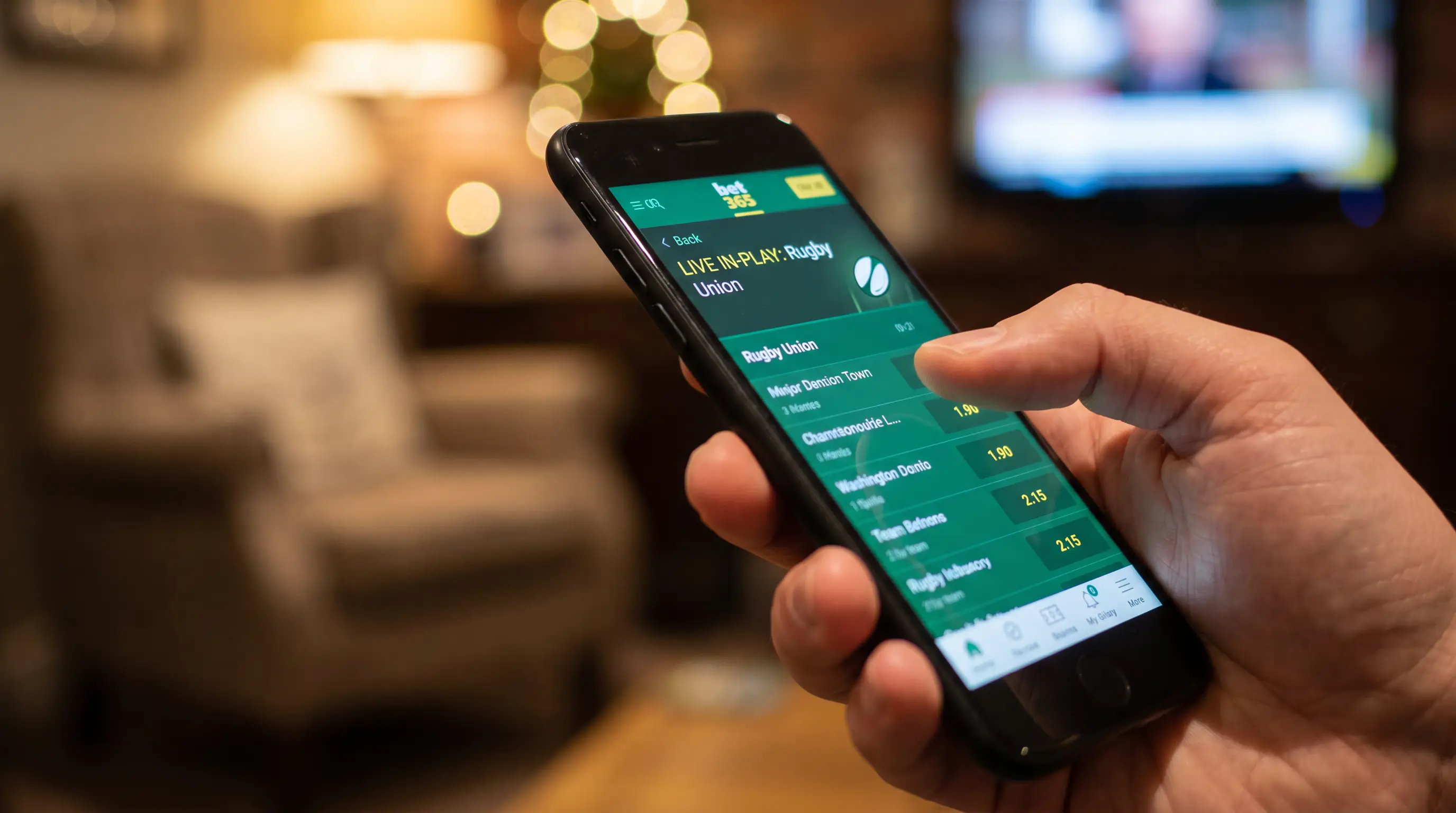
The last time I placed a rugby bet from a desktop computer was sometime in early 2022. I remember it because my laptop was open on the kitchen table, the match was already ten minutes in, and by the time I had navigated to the right market, the odds had moved past the price I wanted. These days, my phone is out before the teams have finished warming up. That shift is not just personal habit – it reflects how the entire UK betting market has reorganised itself around mobile.
More than 70% of all sports bets in the UK are now placed from mobile devices, and that figure is projected to keep climbing through 2026. For rugby specifically, the match-day pattern is even more mobile-dominant: punters watching a game at the stadium, in the pub or on their sofa at home are reaching for the device already in their hand rather than switching to a computer. Around 290 million online bets on real events are placed monthly in the UK, and the overwhelming majority of that volume flows through apps.
The question is not whether you should be using a mobile app for rugby betting – of course you should, if you are not already. The question is which apps actually deliver a rugby experience that matches the demands of the sport: fast in-play updates during scrums and lineouts, reliable cash-out during the tense final ten minutes, and enough market depth on your phone to replicate what you would find on a desktop platform.
Why 70% of Rugby Bets Now Start on a Phone
I tracked my own betting activity across 2025 and the pattern was stark: 91% of my rugby wagers were placed on my phone, 6% on a tablet and 3% on a desktop. The desktop bets were almost exclusively pre-match research sessions where I was comparing odds across multiple tabs – a workflow that mobile still handles poorly. Everything else – the actual bet placement, the live monitoring, the cash-out decisions – happened on a phone.

The industry data confirms this is not unusual. Live betting accounts for roughly 30% of all online sports wagers in the UK, and the vast majority of live bets are placed on mobile because the bettor is watching the event in real time and reacting to what they see. For rugby, that number may be even higher. The sport’s stop-start rhythm – dead time during scrums, lineouts, TMO reviews and injury breaks – creates natural windows where reaching for your phone feels instinctive rather than disruptive.
Active betting accounts in the UK hit 12.7 million during the first quarter of 2025/26, a 10% increase year-on-year. That growth is being driven almost entirely by mobile – new bettors are signing up through app stores, not by typing a URL into a browser. The direction of investment tells the story: at least one major operator has publicly described a strategic commitment to building its sportsbook technology from scratch in-house, prioritising full control over the platform’s performance and evolution. That kind of investment is aimed squarely at mobile, because operators know the app is now the primary – often the only – touchpoint with their customers.
The shift to mobile has also changed what constitutes an acceptable user experience. Five years ago, a betting app that loaded in four seconds was considered adequate. Now, anything above two seconds feels slow, particularly when you are trying to place an in-play bet during a momentum swing in a Six Nations match. The technical demands of live rugby betting – real-time odds updates, instant bet confirmation, responsive cash-out interfaces – require infrastructure that some operators have built well and others are still catching up to.
Top-Rated Rugby Betting Apps for 2026
I use five different betting apps on my phone at any given time during rugby season. Not because I cannot pick a favourite, but because no single app excels at everything I need for rugby. One has the tightest margins on Premiership handicaps. Another has the deepest tryscorer markets. A third has the fastest in-play interface. A fourth offers the most reliable cash-out during live matches. The fifth has the best bet-builder tool for combining rugby selections within a single fixture.
That fragmentation is the honest reality of rugby betting apps in 2026, and anyone telling you there is one app that beats all others on every dimension is either selling something or has not tested the alternatives seriously. What I can do is describe the characteristics that separate the top tier from the mediocre, based on the specific demands rugby places on a mobile platform.
Navigation architecture matters more than you might think. Rugby is not football – it does not sit at the top of every bookmaker’s sport menu. On some apps, finding rugby requires tapping through “A-Z Sports” or scrolling past a dozen more popular options. The best rugby apps either let you pin rugby to a favourites bar or place it prominently enough that you are not hunting for it during a live match. When you are trying to place a bet in the 65th minute of a tight game, three extra taps to find the right sport can cost you the price you wanted.
Odds display formatting is another detail that separates the strong apps from the rest. Rugby odds involve a lot of half-point handicap lines and decimal prices that extend to two or three digits after the decimal. Apps that truncate these – showing “1.9” instead of “1.91” – or that use a font size too small to distinguish “1.91” from “1.97” on a phone screen are creating friction that does not exist on desktop. The best rugby apps use clear, legible typography for odds, with enough spacing between selections that you do not accidentally tap the wrong market.
Match-tracker quality varies significantly. A good rugby match tracker shows the current score, time elapsed, recent events (tries, penalties, cards), possession and territory. A poor one shows only the score and a generic timer. The tracker matters because it is your primary information source when you are betting in-play without a live stream – which is the case for most domestic league fixtures that are behind a broadcast paywall. I rely on the match tracker to judge momentum shifts, and an inaccurate or laggy tracker leads directly to worse betting decisions.
Push notifications for rugby events are an underused feature that can create genuine value. Some apps let you set alerts for specific markets or price movements – “notify me if the handicap line on the Premiership final moves past 7.5” – while others only send generic promotional notifications. The former is a tool; the latter is spam. If your chosen app supports custom alerts, use them for pre-match line movement on fixtures you have already analysed, so you can react quickly when the price hits your target without staring at your phone for hours.
Deposit and withdrawal speed through the app has improved industry-wide, but there are still operators where the withdrawal process on mobile involves more steps than on desktop. I always test the full cycle – deposit, bet, win, withdraw – on a new app before trusting it with significant stakes, because discovering a clunky withdrawal process after you have already committed to the platform is frustrating and avoidable.
The UK betting market is projected to grow by 4.24 billion dollars between 2026 and 2030, and the operators investing most aggressively in that growth are doing so through their mobile platforms. The app you use today will look meaningfully different in twelve months as operators compete for your attention with faster interfaces, deeper personalisation and more sophisticated in-play tools. Staying aware of which platforms are investing in their rugby-specific mobile experience – rather than just their football or horse-racing features – is the easiest way to ensure you are always using the best available tool.
What Makes a Rugby App Stand Out: Speed, Streams and Bet Builders
Every betting app review mentions “speed” as a criterion. What that actually means for rugby, specifically, is worth unpacking. Speed has three dimensions that matter on match day: odds-loading speed (how quickly the current price appears when you open a market), bet-placement speed (time from tapping “place bet” to receiving confirmation) and odds-refresh speed (how frequently in-play prices update on your screen without you having to pull-to-refresh).
I tested all three across a Super League round in April 2026. The fastest apps loaded in-play odds in under one second and refreshed automatically every two to three seconds. The slowest took three seconds to load and required a manual refresh to see updated prices. That two-second difference does not sound like much, but in a live rugby match where a penalty has just been awarded and the odds are shifting, two seconds is the difference between getting the pre-penalty price and getting the post-adjustment price. Over a season of in-play betting, those accumulated seconds translate into meaningful differences in expected return.
Streaming integration is the other feature that separates rugby apps from generic sports-betting apps. When a live stream is embedded within the betting interface – so you can watch the match and see the odds updating on the same screen – the in-play experience is dramatically better than toggling between a stream on one app and the bookmaker on another. Not every operator offers rugby streaming (broadcast rights restrictions limit availability), but those that do and integrate it well within their mobile interface create a match-day experience that is hard to replicate on desktop, where you would typically have the stream in one window and the betting site in another.
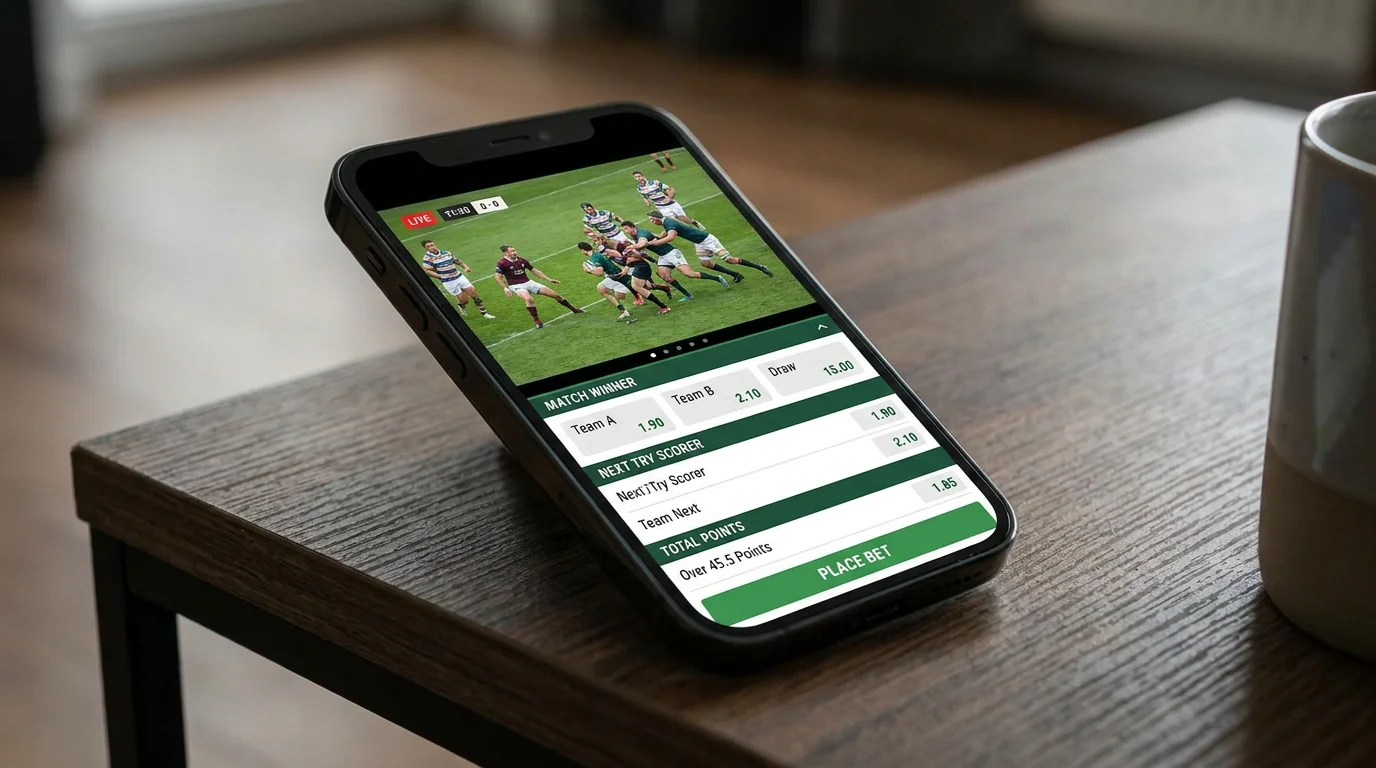
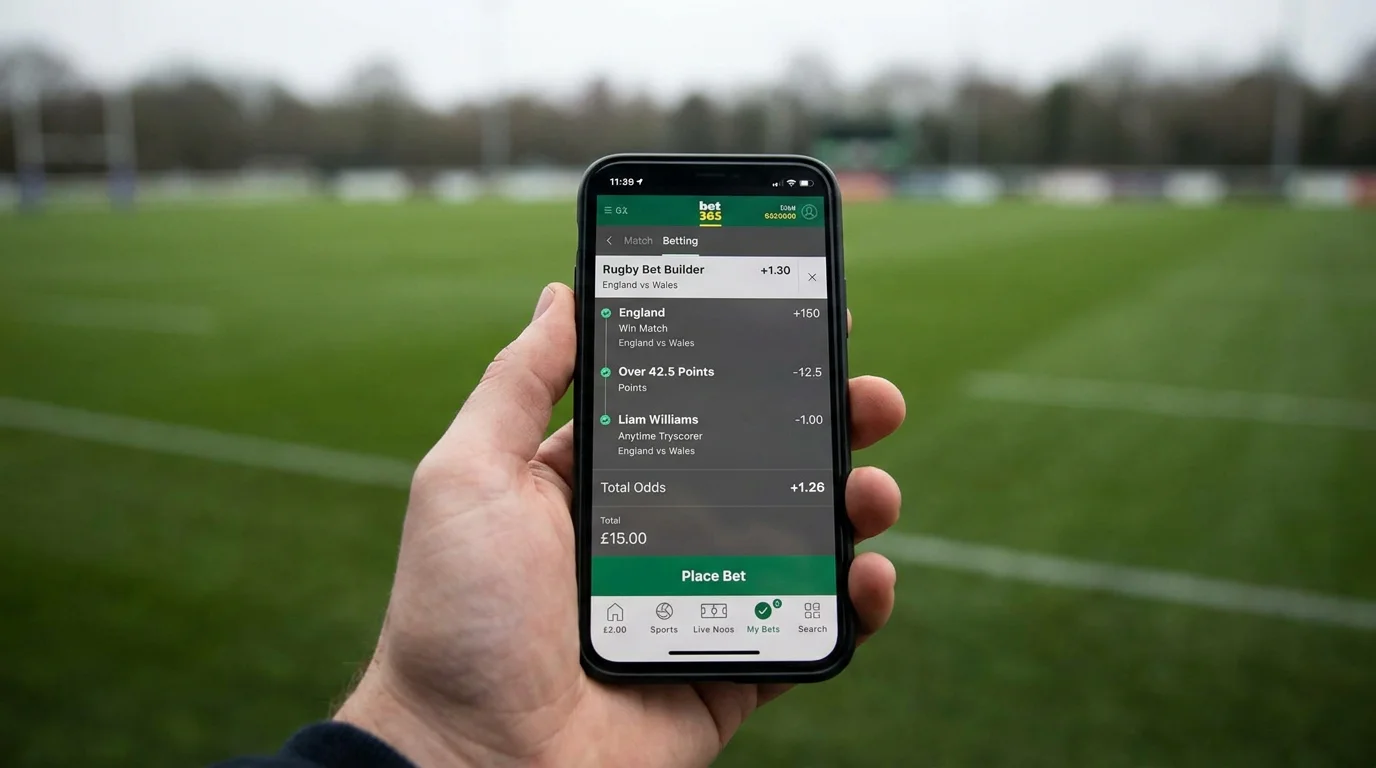
Bet builders on mobile deserve special mention. Combining multiple selections within a single rugby match – say, team to win, total points over 40.5 and a specific player to score a try – requires an interface that displays the correlation-adjusted odds clearly and lets you adjust individual legs without rebuilding the entire bet. The best mobile bet builders I have used show you in real time how adding or removing a selection changes the combined price, which helps you make informed decisions about which combinations are worth the margin premium and which are not.
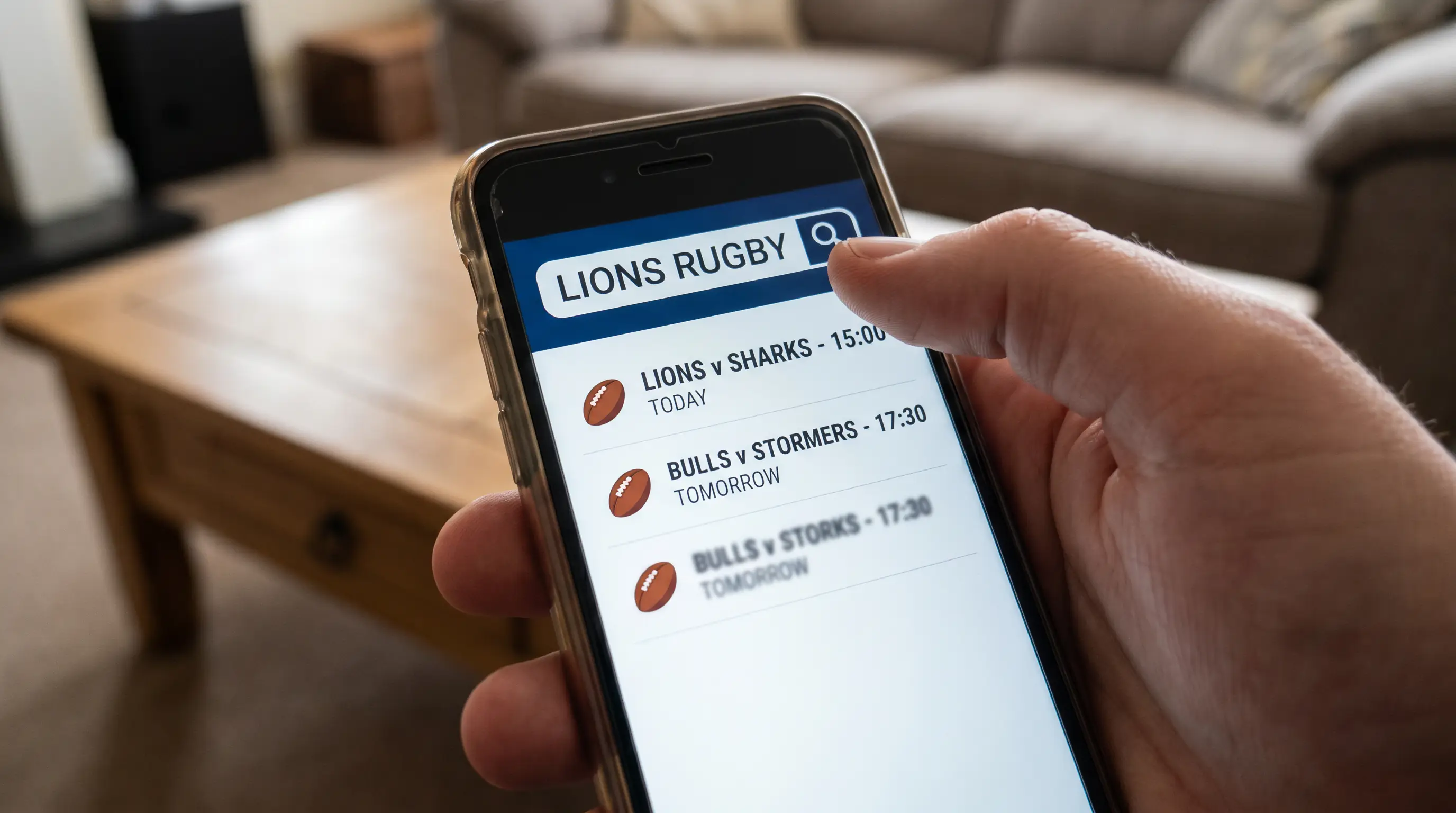
Search functionality within the app sounds mundane, but it separates thoughtful design from lazy porting of a desktop product. If I can type “Bath” into a search bar and immediately see every upcoming Bath fixture with available markets, that saves me navigating through Rugby Union, then Premiership, then the specific round, then the specific match. Multiply that by five bets on a Saturday afternoon and the time saving is real. The apps that get this right also index player names, so searching “Farrell” pulls up any active tryscorer or points-scorer market where Owen Farrell is listed – a shortcut that is invaluable during a busy international window.
Android vs iOS: Platform-Specific Differences
The historical gap between iOS and Android betting apps has narrowed considerably, but it has not disappeared. iOS apps tend to receive feature updates first – a pattern driven by the App Store’s simpler review process and the higher average revenue per user on Apple devices. In practical terms, a new bet-builder feature or in-play interface redesign might appear on iOS two to four weeks before the Android version rolls out.
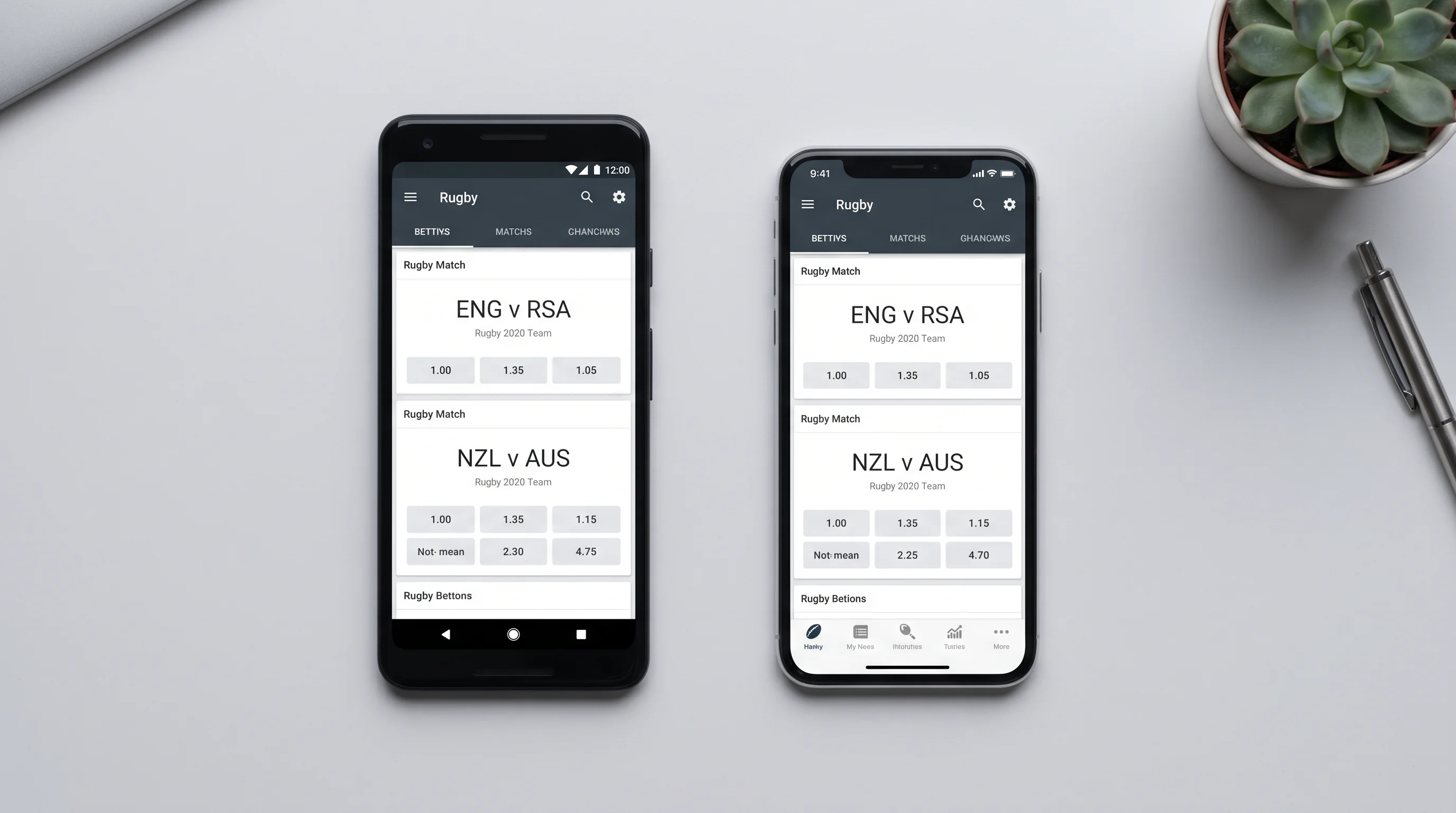
Android users face one additional friction point: sideloading. Some operators still do not distribute their apps through the Google Play Store and instead require you to download an APK directly from their website. This is a legitimate process, but it introduces security considerations – you need to enable “install from unknown sources” – and means you do not benefit from Play Store auto-updates. If your operator requires sideloading, set a calendar reminder to check for app updates monthly, because running an outdated version can cause login issues, slow performance and missed feature releases.
Biometric login (fingerprint and face recognition) works reliably on both platforms in 2026 and has become table stakes for a decent betting app. The security benefit is obvious, but the convenience benefit for rugby betting is equally important: being able to unlock the app and reach the betting interface in under a second, without typing a password, matters when you are reacting to a live event.
In-Play Functionality and Cash-Out Performance on Mobile
I lost a bet I should have won because my cash-out button greyed out for twelve seconds during a TMO review. The review went against the try I had backed, the odds shifted, and by the time the button came back, the cash-out offer was 40% lower than it had been moments earlier. That experience crystallised something for me: in-play functionality on mobile is not a nice-to-have feature. It is the core product for anyone who bets on live rugby.
Cash-out performance on mobile comes down to two factors: availability and accuracy. Availability means the cash-out button is active during the moments when you most need it – during TMO reviews, injury stoppages and the final five minutes of tight matches. Some apps suspend cash-out during these periods precisely because the odds are volatile and the operator wants to protect its margin. Others keep it available but adjust the offer rapidly, which is the approach I prefer because it at least gives you the option. For a deeper analysis of when to use cash-out and when to let the bet ride, I have written a separate guide on rugby cash-out betting decisions.
Accuracy means the cash-out amount displayed on screen is the amount you actually receive when you tap the button. On desktop, this is rarely an issue. On mobile, where network latency can introduce a fraction-of-a-second delay, I have occasionally seen the confirmed cash-out differ from the displayed offer – always downward, never upward. The discrepancy is usually small (a pound or two on a 50-pound cash-out), but it erodes trust and makes you hesitate the next time you consider cashing out, which is exactly the kind of friction that costs money over the course of a season.
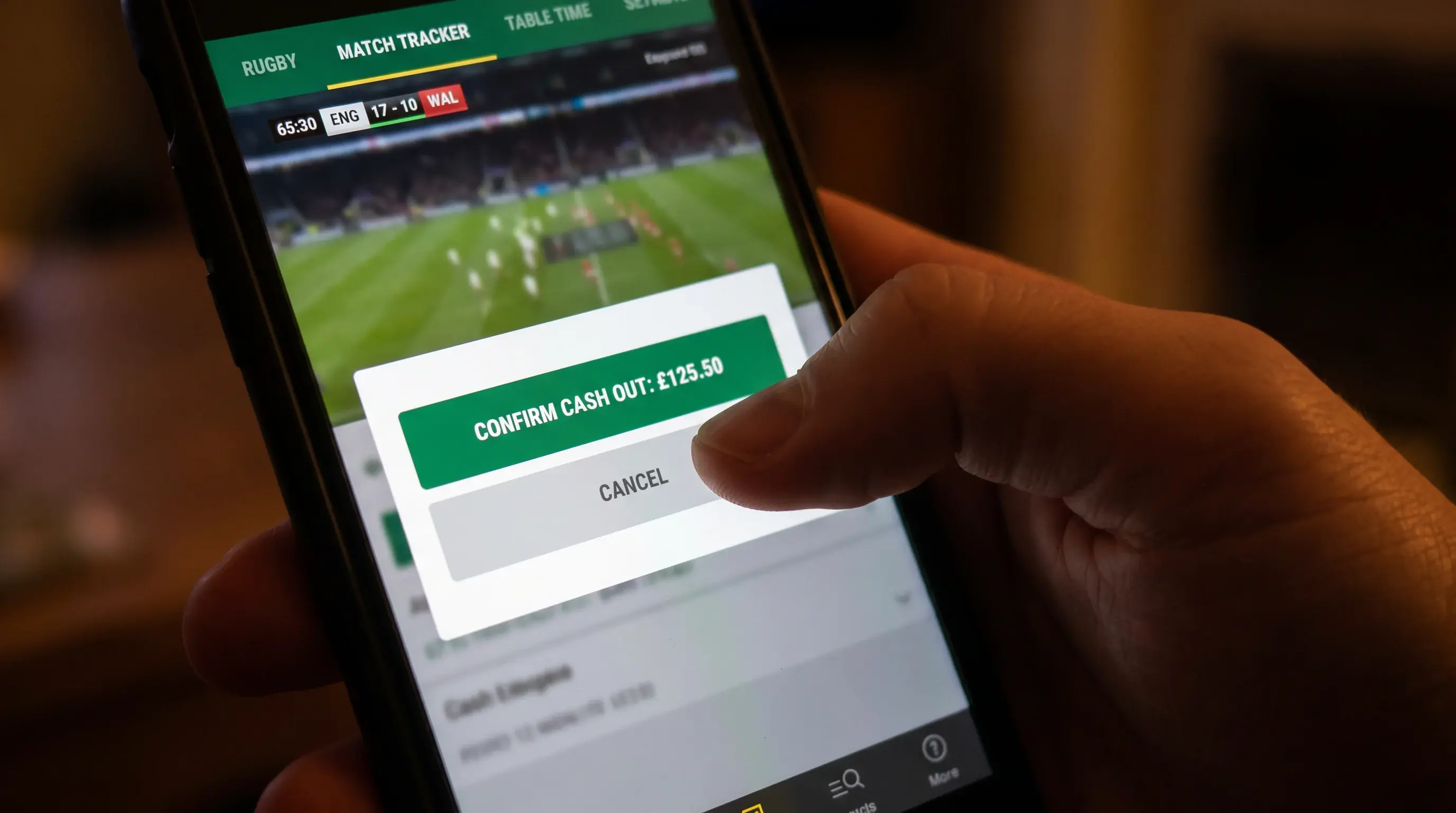
In-play market availability on mobile should mirror what you see on desktop, but it does not always. Some operators reduce the number of in-play markets on their mobile interface to improve loading speed – a trade-off that prioritises performance over depth. If you find that a market you can see on the desktop site does not appear in the app during a live match, try switching to the operator’s mobile website (accessed through your phone’s browser rather than the app), which sometimes exposes markets that the app interface hides.
Security, Licensing and Data Protection on Betting Apps
Every legitimate rugby betting app available to UK users must be operated by a company holding a licence from the UK Gambling Commission. That licence is not optional – it is the legal baseline. If an app is not backed by a UKGC licence, it should not be on your phone, full stop.
Since 31 October 2025, all UKGC-licensed operators have been required to offer customers the option to set a financial limit before making their first deposit. On mobile, this typically appears as a mandatory step during the sign-up process: the app will ask you to choose a deposit limit (daily, weekly or monthly) before you can proceed. This is not a bug or an unnecessary hurdle – it is a regulatory requirement designed to build responsible gambling habits from the first interaction. Take it seriously. Setting a limit you are genuinely comfortable with, rather than the highest option available, is the single most impactful thing you can do to protect your bankroll.
Data protection on betting apps involves two layers: the operator’s handling of your personal information (identity documents, payment details, betting history) and the device-level security of the app itself. On the operator side, UKGC-licensed companies are subject to UK data protection law, which gives you rights over how your data is stored and used. On the device side, keeping your app updated, using biometric login and avoiding public Wi-Fi for bet placement are basic practices that reduce your exposure to interception.
Two-factor authentication is available on some but not all betting apps. If your chosen app offers it, enable it. The minor inconvenience of an extra verification step on login is trivial compared with the consequences of someone gaining access to your funded betting account through a compromised password.

Frequently Asked Questions
Are rugby betting apps safe to use in the UK?
Any app operated by a UKGC-licensed company meets the regulatory baseline for safety, which includes requirements around data protection, fair odds presentation and responsible gambling tools. Beyond that baseline, safety also depends on device-level practices: keeping your app updated, using biometric login, enabling two-factor authentication where available and avoiding public Wi-Fi for transactions. Check your operator’s licence status on the Gambling Commission’s public register before downloading.
Can I live stream rugby matches through a betting app?
Some operators offer live streaming of selected rugby fixtures through their apps, but availability depends on broadcast rights. Premiership matches on TNT Sports and Six Nations games on ITV/BBC are generally not available via bookmaker streams. European club fixtures, lower-profile internationals and some NRL matches are more likely to appear. Streaming availability changes season to season as rights deals are renegotiated, so check the specific fixture rather than assuming the stream will be there.
Do all UK bookmakers offer a dedicated rugby betting app?
Most major UKGC-licensed operators have native iOS and Android apps that include rugby markets. However, the depth of rugby coverage within those apps varies enormously – from operators that treat rugby as a primary sport with deep market lists and fast in-play interfaces, to those that list rugby as an afterthought with basic match-result markets and no live coverage. The app itself is only as good as the rugby product behind it, so test the rugby-specific experience rather than relying on general app ratings.
Prepared by the Rugby Betting Sites editorial staff.