Rugby Live Betting UK: How In-Play Markets Work and Where to Find the Best Real-Time Odds
 Available in US
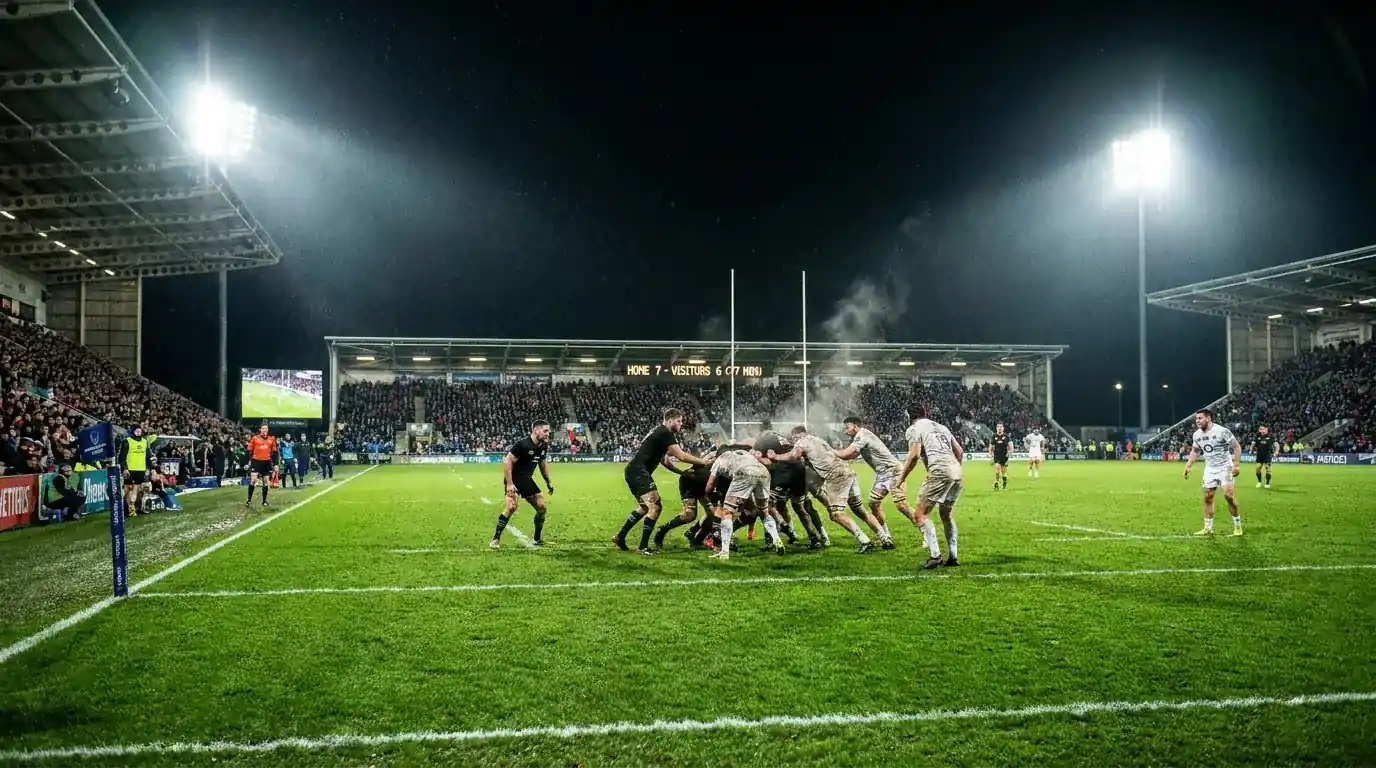
England trail 10-17 at half-time against France in the Six Nations. The rain has stopped, the French pack looks gassed from a dominant first-half maul game, and England’s replacements include two fresh props and an impact centre who has been in devastating form off the bench all season. The pre-match odds had France as 1.60 favourites. At half-time, with the in-play adjustment, France are now 1.45 and England have drifted to 3.10. You think the market has overcorrected – that England’s bench advantage will tell in the final 30 minutes. This is why live betting exists.
Gross gambling yield for real-event betting – the category that includes live wagers on rugby – hit 647 million pounds in the third quarter of 2024/25 alone, a 38% jump year-on-year. That growth is not evenly distributed: live betting accounts for roughly 30% of all online sports wagers in the UK and is growing faster than pre-match betting in every major sport. Rugby, with its natural stoppages and phase-based play, is particularly well suited to in-play wagering because the game provides regular moments of dead time during which bettors can assess the situation, check odds and place a bet before the next phase of play restarts.
But the quality of the in-play experience varies enormously between operators, and what counts as “live betting” on one platform bears almost no resemblance to what another offers. This guide is about separating the genuine in-play product from the marketing label.
Table of Contents
The Scale of Live Betting: 30% of UK Sports Wagers and Growing
The first live rugby bet I placed felt like cheating. It was a Premiership match in 2016, the underdog had just scored against the run of play, and the match-result odds for the favourite suddenly offered value that had not existed before kick-off. I backed the favourite at 1.75 – a price that had been 1.35 pre-match – and they won comfortably. The bookmaker had overcorrected to a single score, and I capitalised. That moment hooked me on in-play, and the market has only grown since.
Live betting’s share of the UK sports-betting handle has settled around 30%, but that aggregate figure masks significant variation by sport. Football’s in-play share is higher because matches run continuously with fewer stoppages. Rugby’s share is lower in absolute terms but growing faster, precisely because operators have improved how they handle the sport’s unique rhythm. The stop-start nature of rugby – scrums take 10-15 seconds to set, lineout calls add 8-12 seconds of dead time, TMO reviews can last minutes – creates natural betting windows that football simply does not have.
The financial incentive for operators to improve their rugby in-play product is substantial. Premiership Rugby’s TNT Sports deal, worth approximately 200 million pounds over five years, has pushed viewership up 11% year-on-year. More viewers translates directly into more in-play bettors, and operators who cannot serve that audience with responsive markets lose them to competitors who can.
Major League Rugby in the United States offers an interesting preview of where the technology is heading. After integrating a single-screen betting experience using TAPPP technology, MLR reported a 25% revenue increase. Rob Calder, Premiership Rugby’s Chief Growth Officer, has spoken publicly about shifting the sport’s commercial partnerships away from traditional categories and toward consumer brands – a direction that, while not naming betting explicitly, acknowledges the role that in-play engagement plays in driving revenue. The broader point is that live betting is no longer an add-on feature; it is a core part of how rugby is consumed and monetised in 2026.
Bookmakers with the Strongest Rugby In-Play Offering
Judging an operator’s in-play rugby offering requires watching actual matches with the platform open, not just browsing the pre-match market list. I have spent entire Six Nations weekends with three different apps running simultaneously on three devices, tracking which one suspends markets first when a try is scored, which one reopens fastest and which one offers the widest range of in-play markets across 80 minutes of rugby.
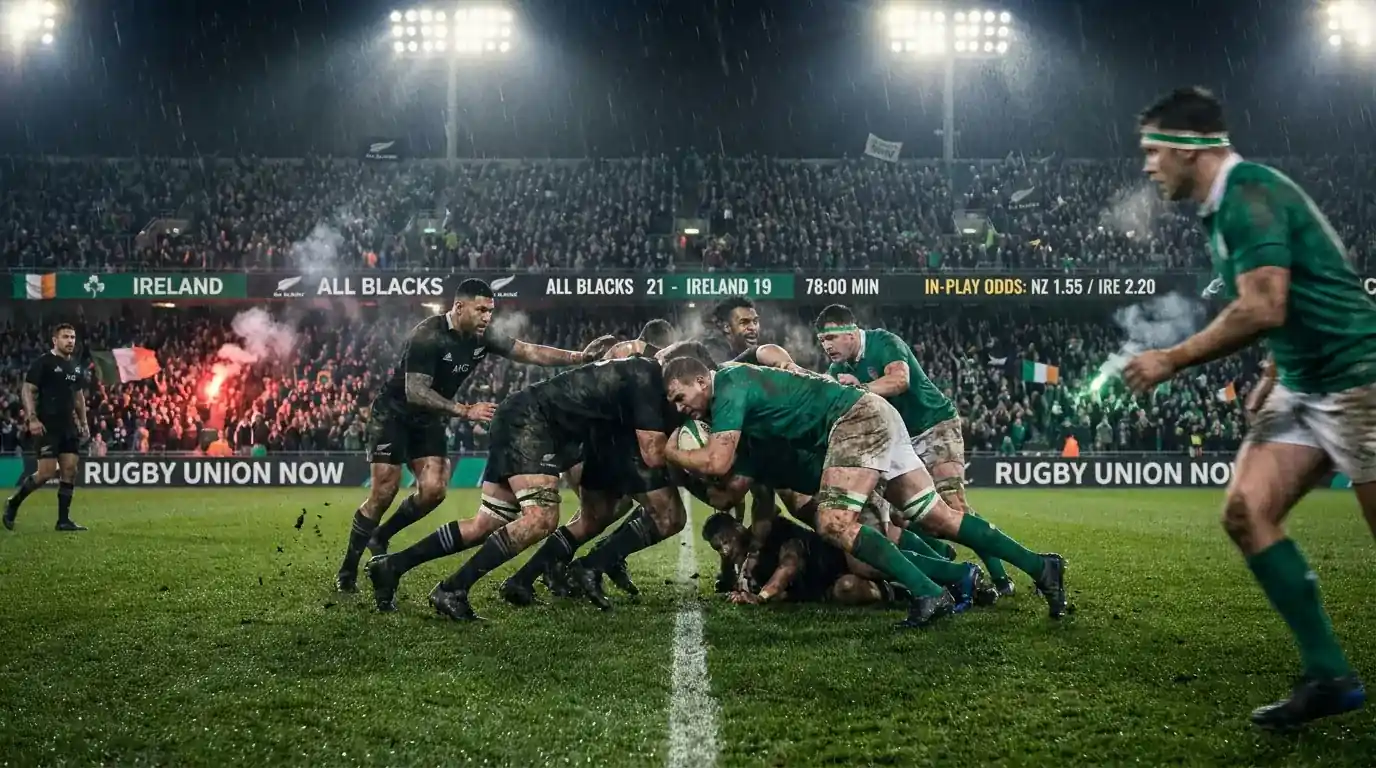
The best in-play operators I have tested share three characteristics. First, they keep the match-result market tradeable for the vast majority of the match – suspending only during TMO reviews, the moment a conversion is being taken and the final seconds of a match where the outcome hangs on a single play. Second, they maintain at least four or five in-play markets simultaneously: match result, next team to score, total points, handicap and next scoring method. Third, their odds adjust within two to three seconds of a visible on-field event, which means the price you see on your screen reflects what is actually happening on the pitch rather than what happened 30 seconds ago.
The weakest operators suspend markets for any phase of sustained pressure – a team entering the opposition 22, a lineout on the five-metre line, a penalty advantage. This approach protects the bookmaker’s margin but effectively locks you out of the market during the exact moments when in-play betting is most valuable. If you cannot trade during a five-metre lineout drive, you are not using an in-play service; you are using a pre-match service with a live score ticker.
Fixture tier matters enormously for in-play quality. A Six Nations match between England and Ireland will have a richer in-play offering than a midweek European pool match between two lower-ranked sides, even on the same platform. I always check the specific fixture’s in-play market list before kick-off rather than assuming the depth I saw last Saturday will be there for Tuesday’s game. Operators that display a “markets available in-play” indicator on their fixture list make this easier; those that do not force you to check manually.
One pattern I have noticed over the past two seasons is that in-play market quality improves measurably during the play-off stages of the Premiership and the knockout rounds of the Champions Cup. Operators assign more resources to high-profile fixtures, which translates into faster odds updates, more available markets and larger accepted stake sizes. If you are going to experiment with live rugby betting for the first time, doing so during a marquee fixture gives you the best possible first impression of what the experience can be.
A final observation on operator behaviour: some platforms offer demonstrably better in-play odds on the team that is trailing. This is a deliberate strategy to attract action on both sides of the market and balance their book. If you are a contrarian bettor who looks for value on the underdog after a poor first half, pay attention to which operators consistently offer the longest prices on the trailing side. That differential can be worth two or three ticks of odds – small on a single bet, but material over a season of in-play wagering.
What Markets Stay Open After Kick-Off
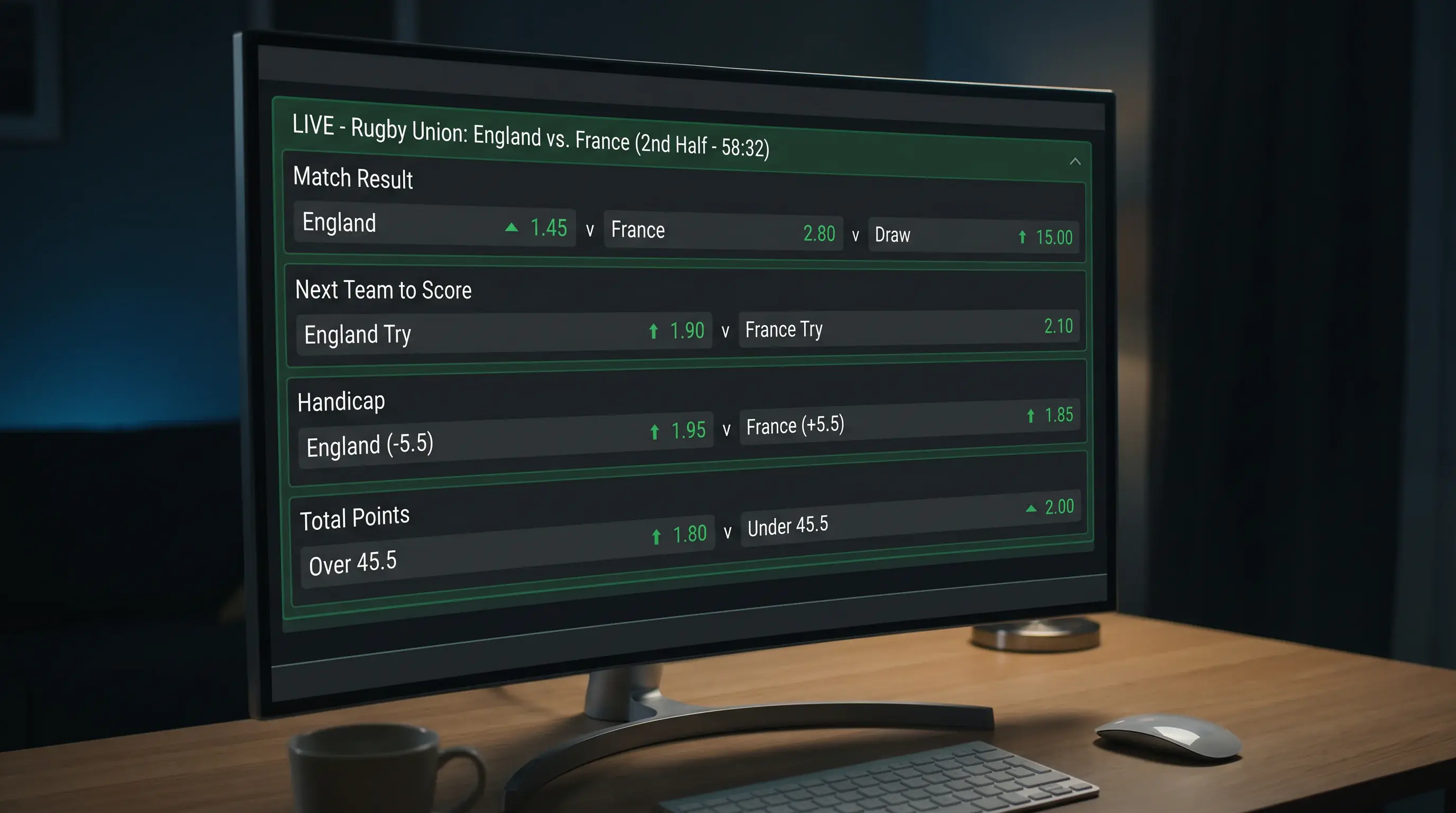
Not every pre-match market survives kick-off. Understanding which markets stay open in-play – and how they behave as the match progresses – is the foundation of any live rugby betting approach. For a tactical breakdown of how to read momentum and time your entries, I have written a separate piece on rugby in-play betting tips, but here I want to focus on what is actually available during a live match.
Match result is the anchor market and stays open for virtually the entire 80 minutes on all reputable platforms. The odds shift in response to scores, cards and territorial dominance, with the most dramatic movements occurring immediately after a try (before the conversion attempt) and after a red card. If you are going to bet on just one in-play market, match result gives you the most liquidity and the tightest margins.
Next team to score is the market I find most useful for tactical betting. After a long period of sustained pressure that has not produced points, the “next team to score” price for the defending side can drift to very attractive levels. If you believe the defence will hold and the attacking team will eventually cough up possession, backing the defending side to score next can offer value at prices of 3.00 or higher – particularly if the defending team has a strong counter-attacking game through their back three.
Handicap markets stay open in-play but are less actively traded than match result because the spread adjusts with every score. After a try, the live handicap recalibrates, and the new line may not offer the value that the pre-match line did. The exception is half-time: the second-half handicap market, which resets to zero at the interval, is one of the most interesting in-play wagers available. It effectively asks “who wins the second half?” and is priced independently of the first-half result, which means an unrelated first half does not contaminate the value.
Total points over/under adjusts continuously and stays open on most platforms until roughly the 70th minute, after which it is often suspended because the remaining time makes the market increasingly binary. The window between the 50th and 65th minute is where I find the most value on totals, because fatigue effects are becoming visible but the market has not yet priced them fully.
Tryscorer markets are available in-play on the better platforms but tend to be suspended more frequently – during any phase of attacking play inside the 22. The practical effect is that you can back a first tryscorer before kick-off or during a break in play, but you cannot reactively place a tryscorer bet when a team is on the attack and a try looks imminent. This is by design: the bookmaker does not want to take tryscorer bets when the probability of a try is at its highest.
Odds Latency and Price Movement During Live Rugby
Odds latency – the delay between an on-field event and the corresponding price change on your screen – is the invisible factor that determines whether in-play betting is a genuine skill game or a frustrating exercise in chasing stale prices. I have measured latency on live Premiership matches by timestamping on-screen events against the moment the odds on my app visibly changed, and the range across operators is wider than you might expect.
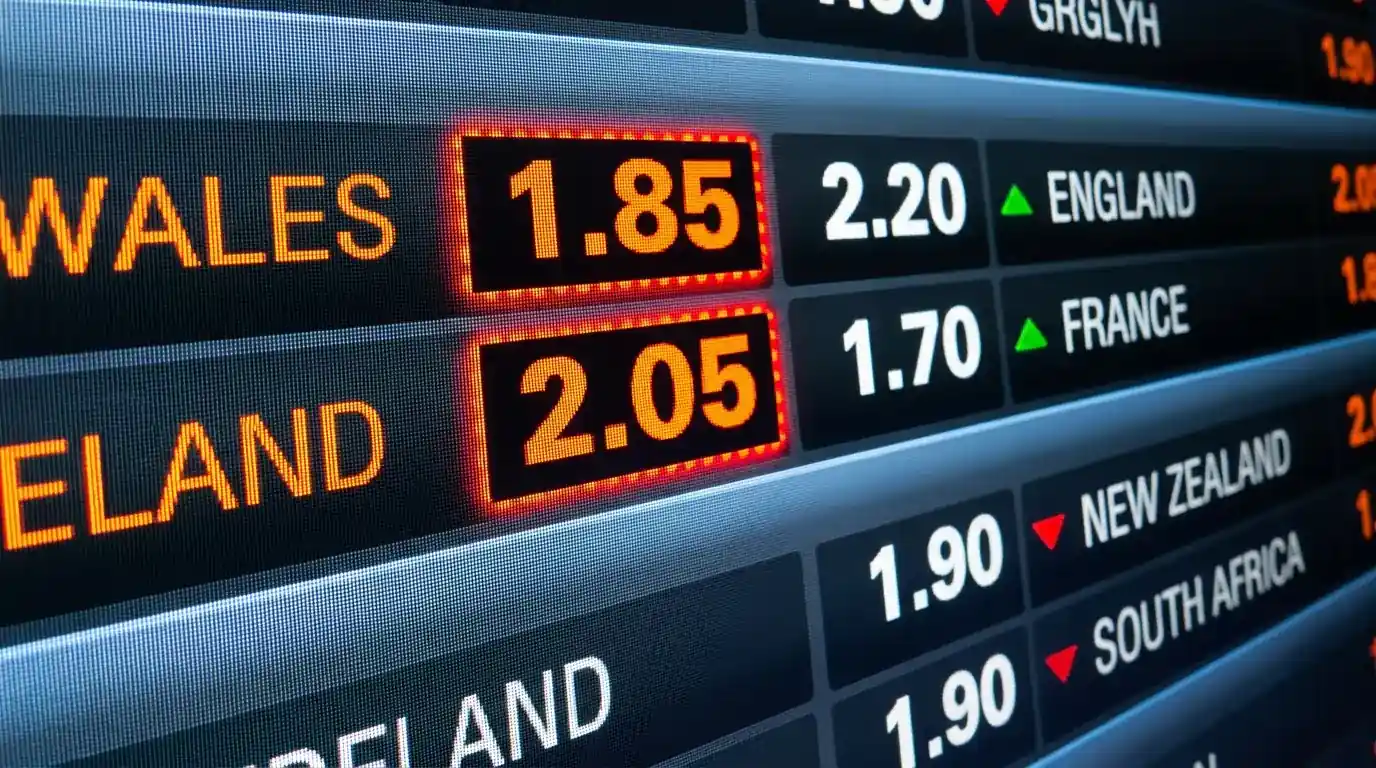
The fastest operators I have tested update match-result odds within two seconds of a try being grounded. The slowest take five to eight seconds, during which time the pre-try price is still displayed on screen. If you are betting the match result and you see a try scored on your stream before the odds move, you have a brief window to back the scoring team at a price that does not yet reflect the score change. This is not a glitch – it is a structural feature of how odds feeds work – and operators manage it by suspending markets rapidly after a score. The question is how rapidly: the best operators suspend and reopen within three seconds. The worst leave stale prices visible for long enough to create confusion about whether the displayed odds are current.
Price movement between scores is the more interesting dynamic for serious in-play bettors. During a long passage of play where one team has sustained territorial dominance, the match-result odds should gradually shift to reflect the increasing probability that the dominant team will score. On the best platforms, this incremental movement is visible in real time – you can watch the price tick shorter as the attacking team gets closer to the try line. On weaker platforms, the price remains static until a score actually occurs, at which point it jumps suddenly. The former gives you opportunities to trade during momentum shifts; the latter reduces in-play betting to a reactive exercise where you are always behind the market.
Live Streaming Availability for Rugby on UK Betting Sites
Watching the match you are betting on changes the in-play experience fundamentally. Without a stream, you are relying on a match tracker, text commentary or a broadcast on a separate device – all of which introduce information lag that puts you at a disadvantage against bettors who can see the action in real time. With an integrated stream inside the betting app, you see the event and the odds on the same screen, which allows you to react within seconds rather than waiting for a text update to confirm what happened.
The reality of rugby streaming on UK betting sites in 2026 is patchy. Premiership matches are locked behind the TNT Sports broadcast deal, Six Nations is split between ITV and BBC, and autumn internationals are on various terrestrial and subscription channels. Bookmaker-supplied streams for these fixtures are essentially non-existent because the rights holders do not sublicense to gambling operators. Where you will find bookmaker streams is on lower-profile fixtures: some European Challenge Cup pool matches, selected Pro14/URC games and occasional international fixtures outside the Tier 1 calendar.
NRL matches are more reliably available via bookmaker streams for UK users, because the Australian rights arrangements differ and some operators with Australian licences can serve the stream to their UK customers. If you bet on NRL fixtures in the early hours of the morning UK time, stream availability through your betting app may be the most convenient – sometimes the only – way to watch the match live.
The practical workaround for most UK rugby bettors is a dual-screen setup: the match on your television or tablet via the relevant broadcaster, and the betting app on your phone. It is not as seamless as an integrated stream, but it eliminates the information lag that comes with relying solely on a text-based match tracker. If you can hear the commentary and see the action, you are reacting to the same information as the bookmaker’s traders, which levels the playing field significantly compared with betting blind off a delayed scorecard.

Cash Out and Partial Cash Out During Live Rugby Matches
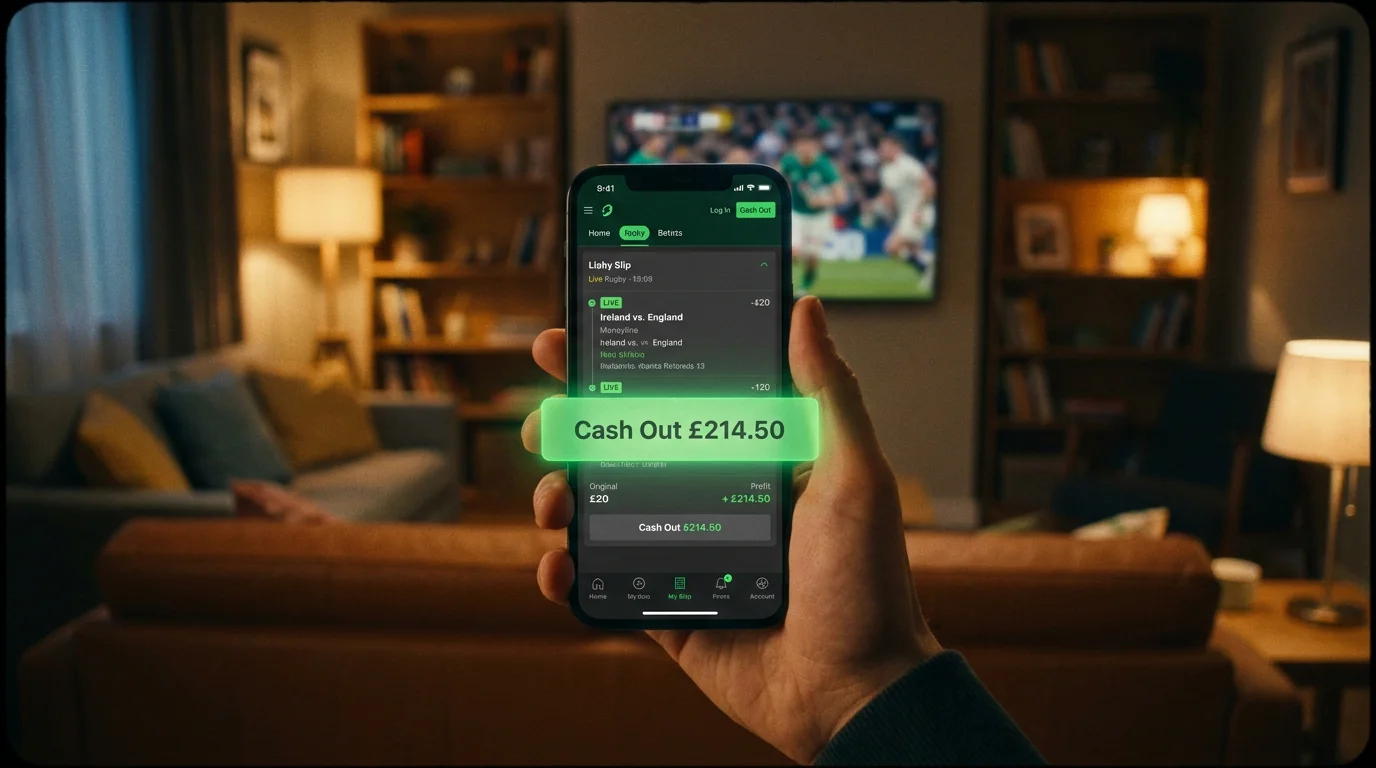
Cash-out during a live rugby match is the tool that gives you the most control over your position, but it is also the tool that bookmakers design most carefully to protect their own margin. The cash-out price you are offered at any moment during a live match is not simply the current odds applied to your stake – it includes an adjustment that favours the operator. Understanding that adjustment is the difference between using cash-out strategically and using it emotionally.
Full cash-out closes your bet entirely and returns a calculated amount based on the current probability of your bet winning, minus the operator’s margin on the cash-out offer. Partial cash-out lets you close a portion of your bet while leaving the rest running – a genuinely useful tool when you want to lock in some profit from a strong position but still have exposure to a larger payout if the result goes your way. Auto cash-out sets a threshold: “cash out my bet if the offer reaches 50 pounds” and executes automatically when that level is hit, removing the need to monitor the match continuously.
The timing of cash-out decisions in rugby follows the sport’s rhythm. The most common error I see is cashing out too early after a favourable first-half result, only to watch the position improve further in the second half. Rugby union in particular has a strong second-half scoring pattern – tired legs, fresh replacements and referees who become less tolerant of infringements as the match wears on all contribute to higher scoring rates after the 50th minute. If your pre-match bet is in a strong position at half-time, the expected value of holding through the second half is often higher than the cash-out offer implies, because the operator’s model has already priced in the possibility of a second-half comeback.
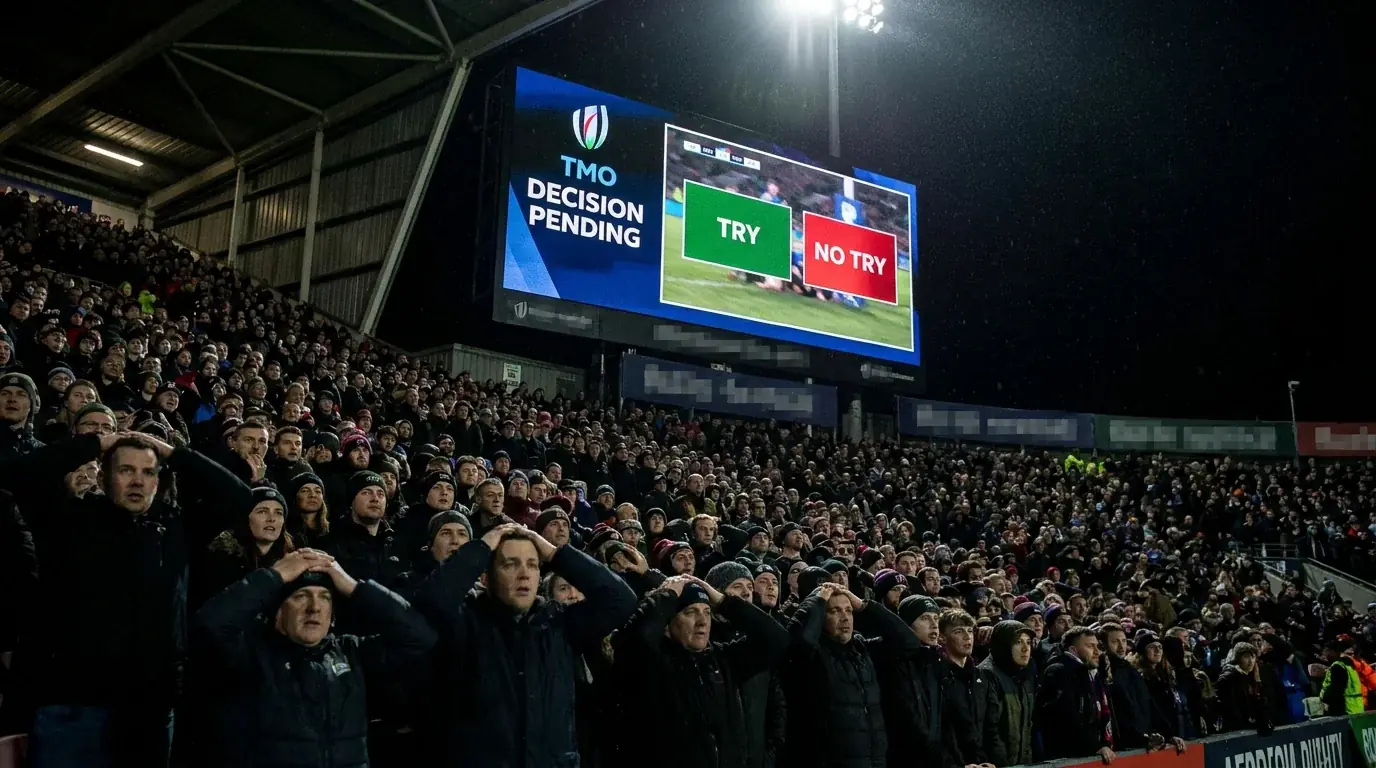
Conversely, cashing out during a TMO review is often the worst time to act, because the uncertainty of the review is already reflected in a depressed cash-out offer. If you believe the TMO will rule in your favour, holding through the review and cashing out after the decision – when the odds have adjusted to the confirmed outcome – will yield a better price. The exception is when the TMO review could go either way and you would be satisfied with the current offer regardless of the outcome; in that case, the certainty of cashing out during the review has genuine value.
Frequently Asked Questions
Which bookmaker has the fastest live rugby odds updates?
Odds update speed varies by fixture and platform, but the fastest operators I have tested adjust match-result prices within two seconds of a score and refresh odds incrementally during sustained phases of play. There is no single ‘fastest’ operator across every match – performance can vary with server load during peak fixtures like a Six Nations Saturday. Testing multiple apps during early-season fixtures is the best way to identify which platform performs most consistently for the competitions you follow.
Can I cash out a rugby bet mid-match?
Yes, most UKGC-licensed operators offer cash-out on rugby bets during live matches. Full cash-out, partial cash-out and auto cash-out are all available depending on the platform. Cash-out may be temporarily suspended during TMO reviews, conversion attempts and the final minutes of tight matches. The cash-out offer includes a margin adjustment favouring the operator, so the amount you receive will be less than a pure mathematical recalculation of your bet’s current value.
What rugby markets are available during in-play betting?
Core in-play markets typically include match result, handicap, total points over/under, next team to score and next scoring method. Tryscorer markets are available on some platforms but are frequently suspended during attacking phases. Second-half handicap, which resets at the interval, is available on the stronger in-play platforms. Market depth depends on the fixture: a Six Nations match might have eight or more in-play markets active simultaneously, while a midweek European pool game might have only three.
Is live streaming rugby free on betting sites?
Where available, live streaming on UK betting sites typically requires only a funded account or a recently placed bet on the relevant fixture – there is no separate subscription fee. However, availability for rugby is limited. Premiership, Six Nations and most major international fixtures are not available via bookmaker streams due to broadcast rights restrictions. Lower-profile European club matches, some URC fixtures and selected NRL matches are more likely to be streamed.
Published by the Rugby Betting Sites team.