
Rugby Handicap Betting Explained: Point Spreads, Line Movement and Practical Examples
 Available in US
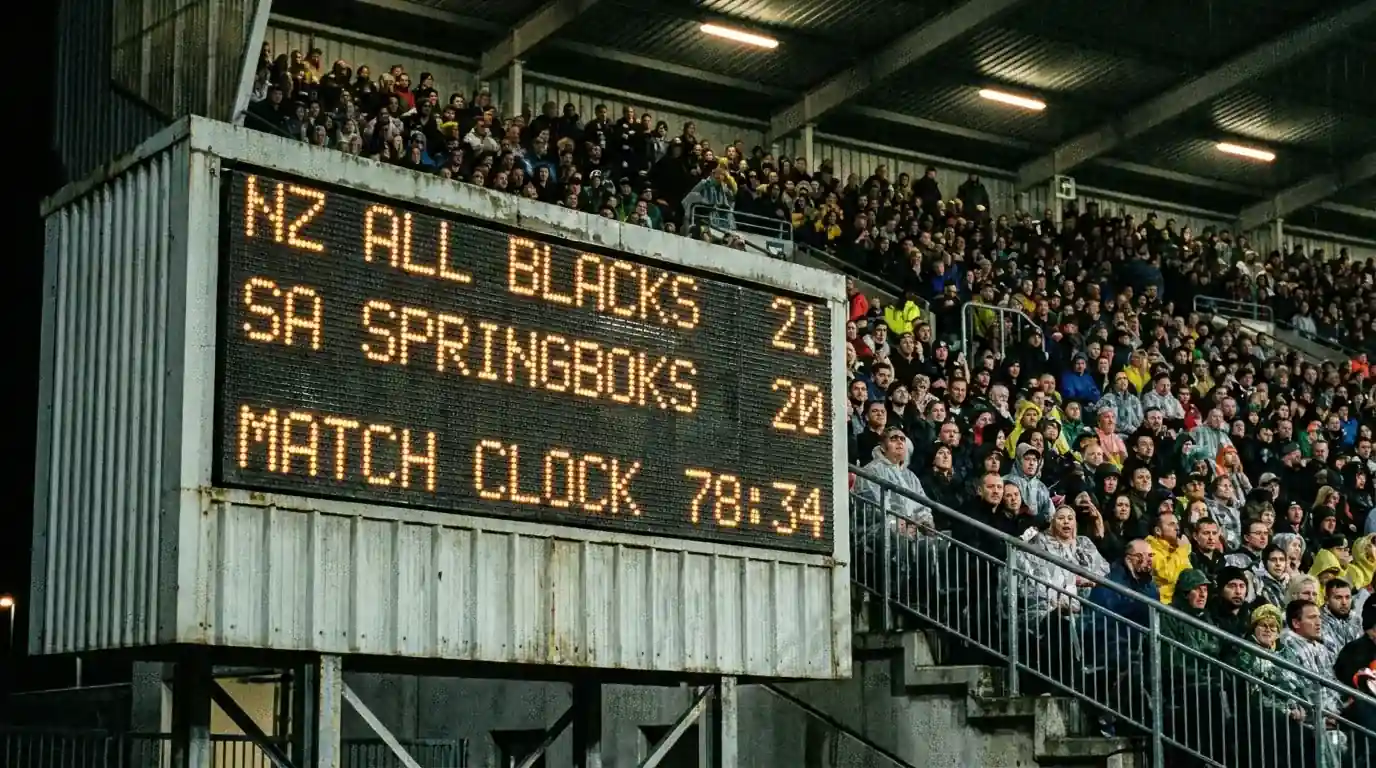
The first handicap bet I ever placed on rugby was a disaster. Saracens minus 14.5 against a mid-table Premiership side in 2015 – I was convinced the margin would be comfortable, and they won by exactly 14. That one-point miss taught me more about how handicap lines work in rugby than any textbook explanation could. The half-point exists for a reason, the line is priced to split opinion, and the bookmaker’s goal isn’t to predict the margin – it’s to attract equal money on both sides. Once you understand that, handicap betting stops being a guessing game and starts being a market you can read.
How Handicap Betting Works in Rugby: Step-by-Step
A handicap bet adds or subtracts points from a team’s final score before determining the outcome. If you back a team at -7.5, they need to win by 8 or more points for your bet to land. If you take the underdog at +7.5, they can lose by up to 7 points and you still collect. The half-point eliminates the possibility of a push – there’s always a winner.
Let me walk through a concrete example. Say Leinster are hosting Munster in the URC, and the bookmaker sets the handicap line at Leinster -10.5. If Leinster win 28-14 – a 14-point margin – your bet on Leinster -10.5 wins. If Munster keep it to 28-21 – a 7-point margin – the bet loses because the adjusted score (28 minus 10.5 = 17.5) is less than Munster’s 21. On the other side, anyone who backed Munster +10.5 would win that second scenario, because Munster’s adjusted score (21 plus 10.5 = 31.5) beats Leinster’s 28.

The beauty of handicap betting in rugby is that it levels the playing field. A match between a heavy favourite and a relegation candidate might have match-winner odds of 1.05 versus 12.00 – useless for generating value. The handicap market prices both sides near evens (typically 1.85 to 1.95), giving you a meaningful decision to make. That’s where the analysis starts, not where it ends.

I price handicap lines by building a points-based model for each team: expected points scored and conceded, adjusted for home advantage, recent form, and opponent strength. The difference between my model’s predicted margin and the bookmaker’s line is the edge I’m looking for. If my model says Leinster by 14 and the line is -10.5, there’s value on the favourite. If the line is -17.5, the value sits with Munster. It’s that simple in principle and that difficult in practice.
Handicap Lines in Union vs League: Why the Numbers Differ
I bet on both codes, and the handicap markets behave differently in ways that catch out punters who treat them interchangeably. Rugby union handicap lines tend to be tighter, typically ranging from 3.5 to 18.5 for most domestic matches, because the scoring is slower and the game’s structure – scrums, lineouts, mauls – provides more opportunities for the weaker team to disrupt tempo and control territory.
Rugby league is a different animal. Super League expanded to 14 teams from 2026, and matches in the 13-a-side code produce higher scores on average because the play-the-ball mechanism keeps the game flowing with fewer stoppages. Handicap lines of 20.5 or even 28.5 are not unusual for a fixture between a top-four side and a newly promoted club. I’ve seen Melbourne Storm priced at -18.5 in NRL fixtures, and that kind of spread simply doesn’t exist in union outside of a Tier 1 versus Tier 2 international.

The practical implication is that league handicaps carry more variance. A 20-point swing in a rugby league match can happen in 10 minutes of play – four quick tries and it’s done. In union, a 20-point swing typically requires sustained dominance over 25 to 30 minutes, making it rarer and more predictable. My hit rate on union handicaps runs about 4% higher than on league handicaps over the past five years, and I attribute that entirely to the lower volatility in 15-a-side rugby.
Asian Handicap vs European Handicap in Rugby Markets
Most UK bookmakers default to European-style handicaps with half-point lines, but several now offer Asian handicap options on major rugby fixtures, and the distinction matters more than casual bettors realise. About 30% of all online sports bets in the UK are placed live, and Asian handicap markets are particularly popular in that context because they offer split-line options that reduce risk.
An Asian handicap of -7.0, -7.5 splits your stake across two lines. Half goes on -7.0 and half on -7.5. If the team wins by exactly 7, you get half your stake back (the -7.0 portion pushes) and lose the other half (the -7.5 portion). It’s a built-in insurance mechanism that doesn’t exist in European handicap format.

I use Asian handicaps primarily for matches where my model puts the predicted margin right on or near the bookmaker’s line. If the line is -10.5 and my model says the margin should be 10 or 11 points, a European handicap is essentially a coin flip. An Asian -10.0, -10.5 line gives me partial protection if the margin lands exactly on 10. The trade-off is slightly lower odds on the winning portion, but over a large sample, the variance reduction is worth it.
For a broader look at how rugby betting markets are structured beyond handicaps, including totals, tryscorer, and outright options, I’ve mapped the full landscape elsewhere. But if you’re going to specialise in one market type, handicap betting rewards depth of analysis more than any other.
Reading Line Movement Before Kick-Off
The handicap line you see on Monday morning will not be the same line available at kick-off on Saturday. Lines move – sometimes by a point, sometimes by four or five – and the direction and timing of that movement tells you something about where the informed money is going.

I check opening lines at three or four bookmakers as soon as they’re posted, usually Sunday evening or Monday morning for the following weekend’s fixtures. If one operator opens at -10.5 and another at -12.5 on the same match, there’s a discrepancy that the market will resolve over the coming days. Tracking which direction the lines converge tells me which side the sharp bettors – the ones who move markets – are backing. If both lines settle at -11.5 by Thursday, the money has spoken.

Team news is the single biggest driver of late line movement in rugby. A confirmed absence of a key fly-half can shift a handicap line by 3 to 5 points in 24 hours, and those movements are often sharper than the underlying probability change warrants. The market overreacts to star-player absences in rugby more than in almost any other sport, because the sample sizes are small and the public perception of individual impact is outsized. That overreaction is where I find some of my best handicap value – fading the panic when a big name drops out of the starting XV.
What does -7.5 mean in rugby handicap betting?
A handicap of -7.5 means the favoured team starts the match with a 7.5-point deficit for betting purposes. They need to win by 8 or more points for the bet to succeed. The half-point eliminates draws in the betting market, ensuring every handicap bet has a definitive winner.
Is Asian handicap available for rugby matches?
Several UK bookmakers now offer Asian handicap options on major rugby fixtures, particularly Six Nations, Premiership, and URC matches. Asian handicaps allow split-line betting that provides partial refunds when margins land on specific numbers, reducing variance compared to standard European handicap format.
Why do rugby handicap lines move before kick-off?
Lines move primarily due to betting volume from sharp bettors, team news announcements, and injury updates. A confirmed absence of a key player can shift the line by 3 to 5 points in 24 hours. Tracking line movement from opening to kick-off reveals where informed money is being placed.
Written by the editors at Rugby Betting Sites.