Rugby Bet Builder Explained: How to Combine Selections Within a Single Match
 Available in US

The first time I used a bet builder on a rugby match, I combined three selections I was confident about individually: home win, over 3.5 total tries, and the home full-back to score anytime. Each selection had positive expected value on its own. The combined odds were 6.50, and the bet lost because the match produced exactly three tries – one short of my total. That’s the core tension of bet builders: you’re combining correlated outcomes into a single wager, and the pricing of that correlation is where the bookmaker either gives you value or takes it away.
How Bet Builders Price Correlated Rugby Outcomes
A bet builder – sometimes called a same-game multi or “build-a-bet” – lets you combine multiple selections from a single match into one bet. The odds are calculated by the bookmaker’s pricing engine rather than by simply multiplying the individual odds together, because the outcomes are correlated: if the home team wins, the probability of over 3.5 tries is higher than if the away team wins, because dominant teams tend to score more freely.
Over 30% of UK online sports bets are placed in-play, but bet builders are almost exclusively a pre-match product. The pricing model needs time to calculate the correlations between outcomes, and the real-time adjustments required for live bet builders are computationally expensive. Some operators are beginning to offer in-play bet builders on high-profile rugby fixtures, but the market range is narrower and the margins are wider than pre-match equivalents.

The correlation pricing is the black box, and it’s where most of the bookmaker’s edge sits. When you combine “home win” with “home captain to score a try”, the two outcomes are positively correlated – a team that wins is more likely to have its key attackers scoring. The bookmaker accounts for this by reducing the combined odds below what a simple multiplication would produce. The question for the bettor is whether that reduction is fair or excessive. In my experience, bookmakers overestimate positive correlations by 3 to 8% on average, which means the combined odds are slightly worse value than the true probability warrants. That margin varies by operator, by sport, and by the specific combination of markets.
Which Bookmakers Have the Strongest Rugby Bet Builder
Not all bet builders are created equal, and the differences matter more than most bettors realise. The three variables that determine bet builder quality are: the range of markets available for combination, the number of legs you can include, and the competitiveness of the correlation pricing.
Market range is the first filter. The best rugby bet builders let you combine match result, handicap, total points, individual tryscorer (first, anytime, last), player to score over/under a set number of points, total tries, winning margin, half-time result, and selected player props. The weakest restrict you to match result, total points, and one or two tryscorer options. A restricted market range limits your ability to construct bets that reflect your actual analysis of the match.

Leg limits vary from three to twelve depending on the operator. I rarely exceed four legs in a bet builder, because each additional leg compounds the correlation uncertainty and gives the bookmaker more room to embed margin in the pricing. If an operator restricts you to three legs, that’s not a limitation for my purposes – but if you prefer longer-form combinations, the higher limits offer more flexibility.
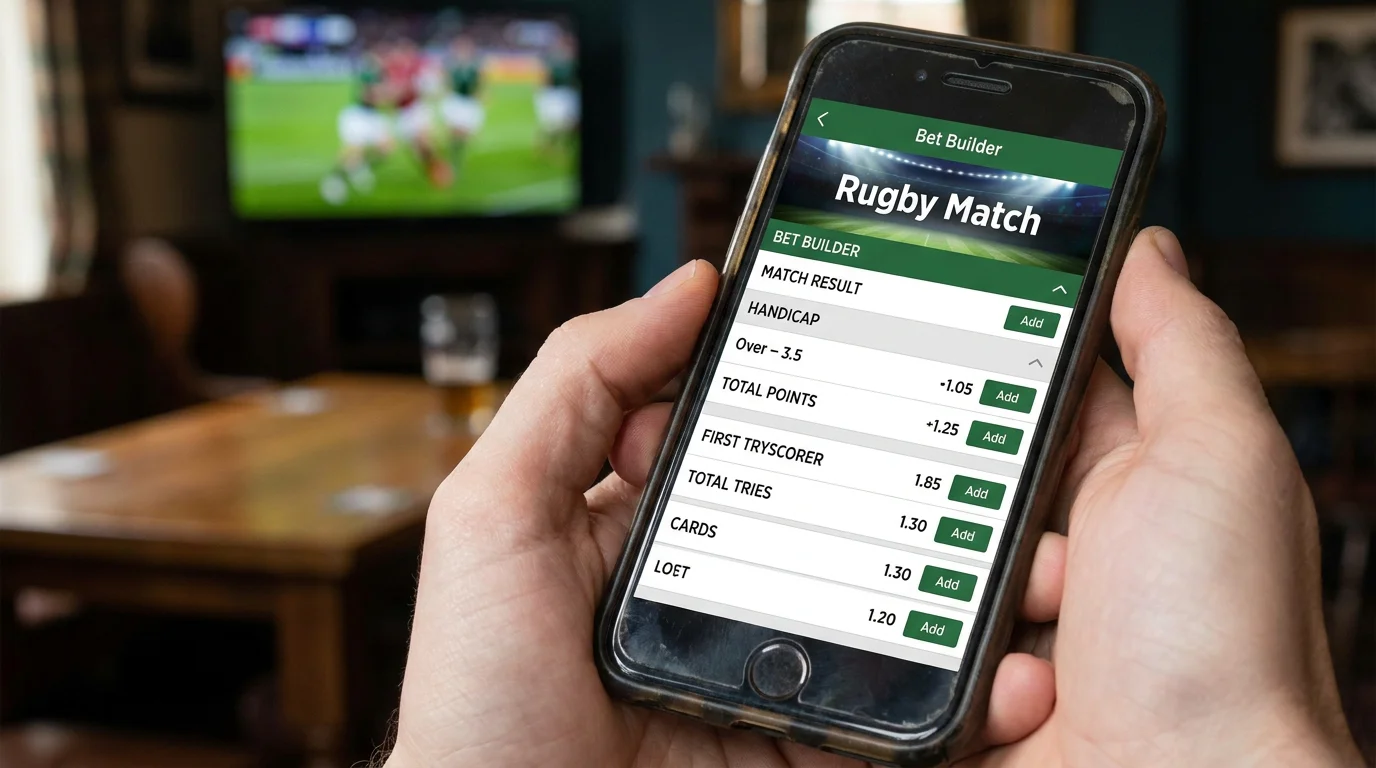
Pricing competitiveness is the hardest variable to assess without a systematic approach. I occasionally build the same four-leg bet builder across three operators simultaneously, compare the combined odds offered, and note the spread. The differences can be striking: the same combination of home win, over 44.5 points, anytime tryscorer, and first-half most points produced odds of 5.80 at one operator and 7.20 at another. That 24% spread is entirely attributable to differences in how each operator prices the correlations between legs.
Smart Combination Principles for Rugby Bet Builders
Around 290 million online bets are placed monthly in the UK, and bet builders account for a rapidly growing share. The appeal is obvious – custom-built bets at eye-catching odds on a single match you’re watching – but the smart combinations are less obvious.
My first principle is to combine markets with low or negative correlation. “Home win” plus “anytime tryscorer for an away winger” is a low-correlation combination, because the home team winning doesn’t strongly predict which specific away player scores. The bookmaker’s correlation adjustment is smaller on uncorrelated legs, which means the combined price is closer to the true probability. By contrast, “home win” plus “home captain to score” plus “over 4.5 total tries” is a heavily correlated trio, and the pricing adjustment will eat a larger share of the expected value.

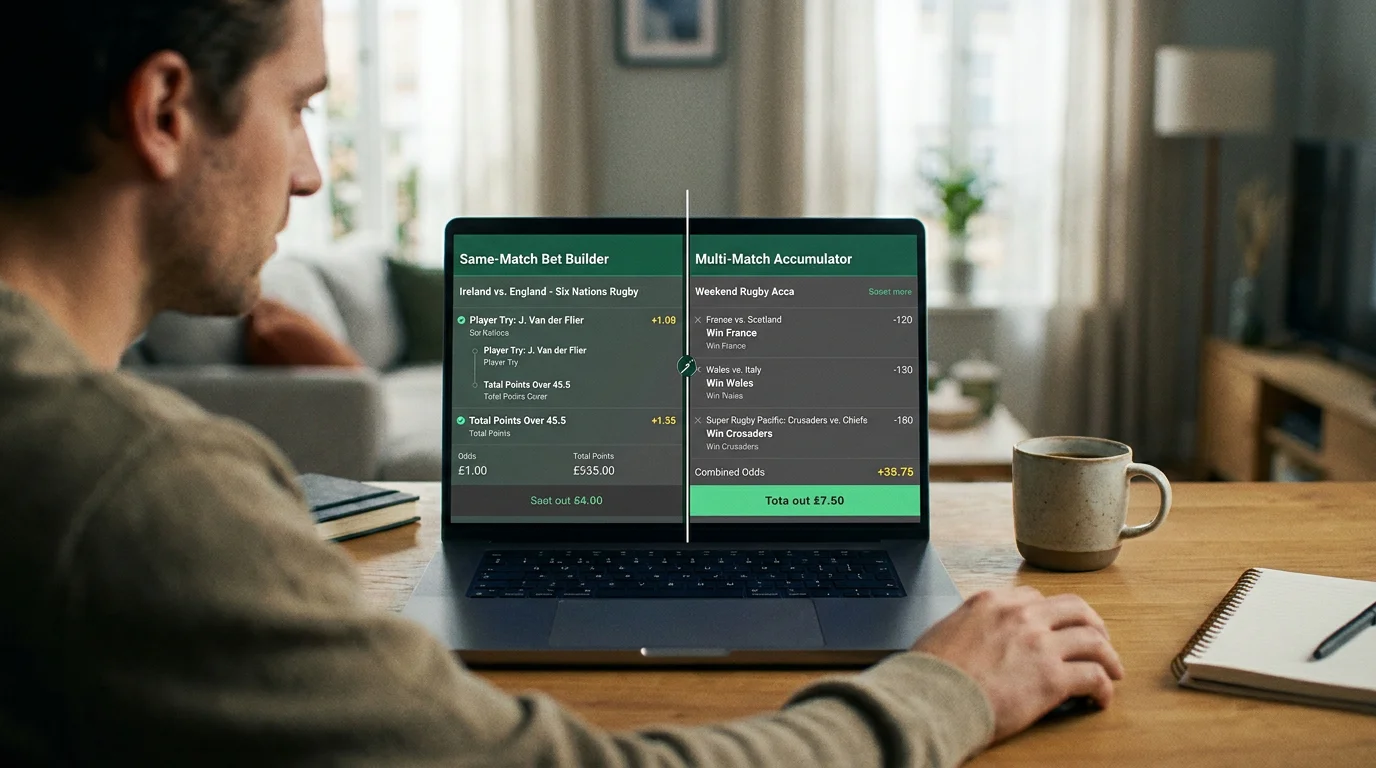
My second principle is to avoid using the bet builder as a substitute for an accumulator. The temptation is to treat the bet builder as a single-match version of a multi-fold acca, piling in selections to inflate the odds. But the correlation pricing makes long bet builders a worse proposition than equivalent accumulators across separate matches, where the outcomes are genuinely independent. Use bet builders for two- to four-leg combinations where you have a specific thesis about how the match will play out, not as a vehicle for chasing big numbers.
The third principle is to check whether the individual legs represent value before combining them. A bet builder can’t transform a bad bet into a good one through combination – it compounds the edge, positive or negative. If your match-result selection has negative expected value, adding two more legs doesn’t fix that. Build from individually sound positions, and the combination will take care of itself.
One practical habit: before confirming any bet builder, mentally price each leg independently and multiply the odds. Then compare that product to the bet builder’s combined odds. The gap between the two numbers is the correlation adjustment the bookmaker is charging. If that gap exceeds 10 to 15%, the pricing is aggressive and the bet may not be worth placing at those odds, even if the individual legs are sound.
What is a rugby bet builder?
A bet builder lets you combine multiple selections from a single rugby match into one bet. Unlike an accumulator across different matches, the selections are from the same fixture, and the odds are calculated by the bookmaker’s correlation model rather than by multiplying individual prices. Common combinations include match result, total points, and tryscorer selections.
Can I use a bet builder on in-play rugby markets?
Some operators offer limited in-play bet builder functionality on high-profile rugby fixtures, but the market range is narrower and the margins wider than pre-match bet builders. The computational demands of pricing live correlations mean most bet builder products remain pre-match only, with the bet locked in before kick-off.
Created by the ”Rugby Betting Sites” editorial team.