Rugby Free Bet Offers: How to Claim Them, What They’re Actually Worth and Common Pitfalls
 Available in US
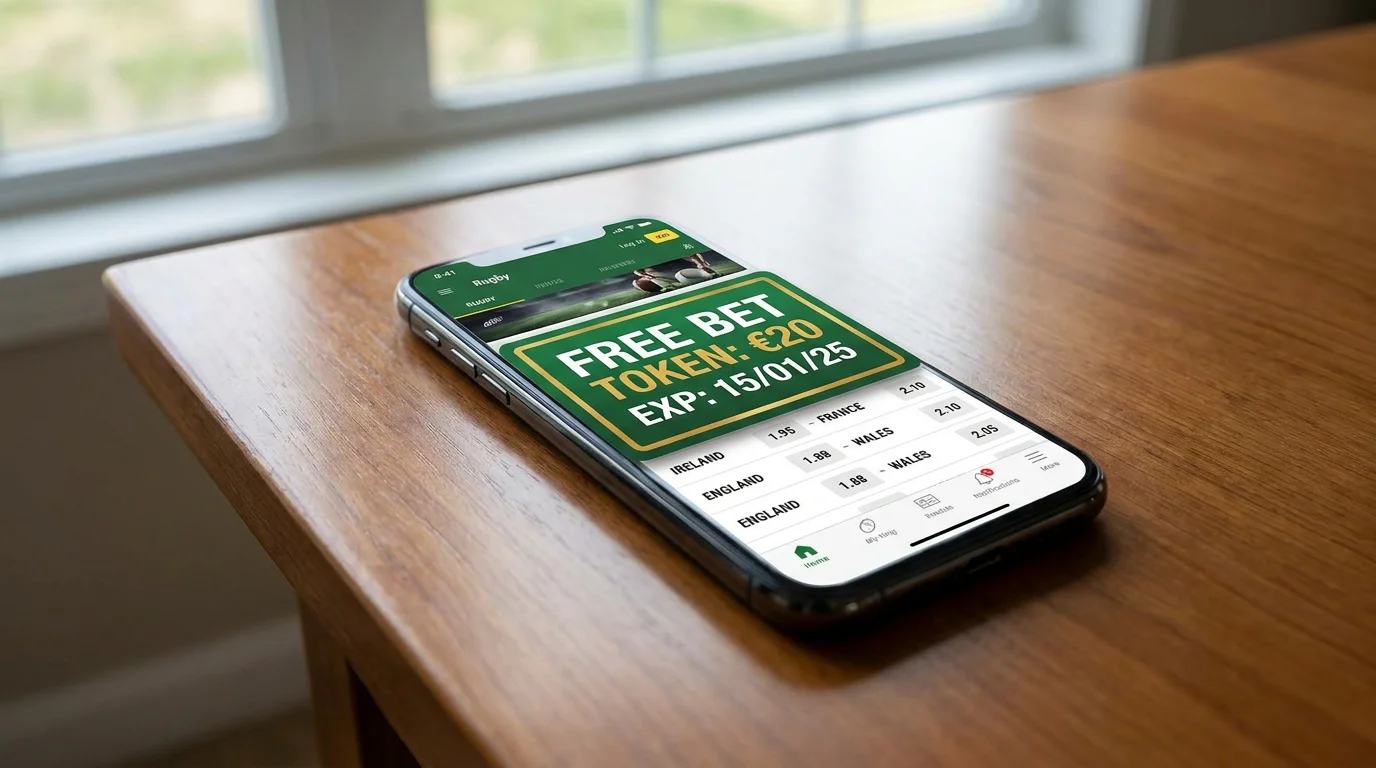
I claimed my first rugby free bet in 2015 – a “bet 10 get 30 in free bets” sign-up offer that I thought was literally 30 pounds in my pocket. It wasn’t. The free bets returned profit only, not the stake, and two of the three 10-pound tokens expired before I used them because I didn’t read the seven-day validity window. I extracted about 8 pounds of real value from a promotion that promised 30. That experience was expensive tuition in a lesson that applies to every free bet offer in the market: the headline number and the actual value are never the same thing.
Types of Rugby Free Bets and How Each One Works
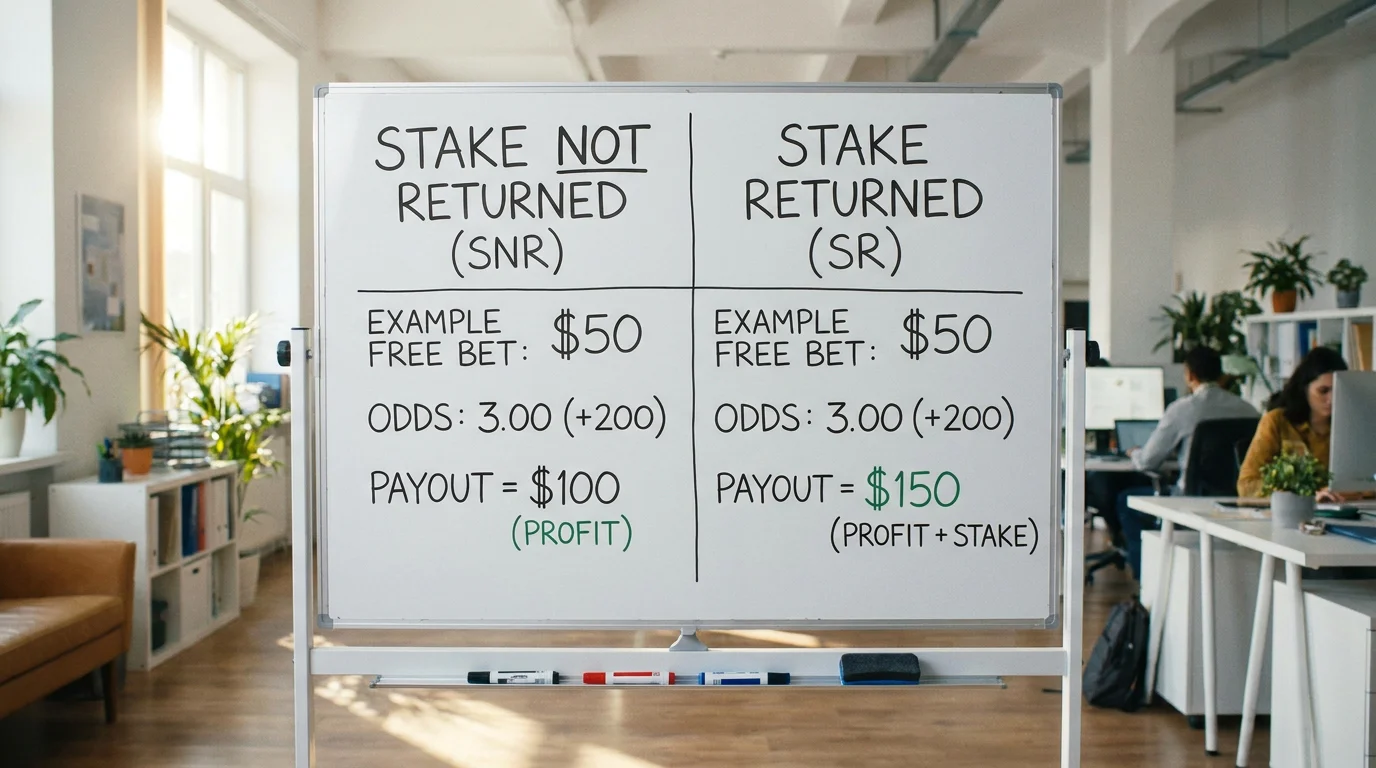
Free bets come in three primary forms, and the mechanics of each affect their real value differently. The most common is the “stake not returned” free bet – you place the bet, and if it wins, you receive the profit but not the free bet stake itself. A 20-pound free bet at odds of 3.00 returns 40 pounds if it wins (60 minus the 20 stake that isn’t returned). At average rugby odds of around 2.00, a stake-not-returned free bet is worth roughly 50% of its face value. A 20-pound free bet is actually worth about 10 pounds in expected terms.
The second type is the “stake returned” free bet, which works like a normal bet – if it wins, you keep both the profit and the original token value. These are rarer and significantly more valuable, worth roughly 75 to 85% of face value depending on the odds you use them at. I’ve seen stake-returned free bets offered primarily as retention incentives for existing customers rather than sign-up promotions.
The third type is the matched deposit bonus with wagering requirements. You deposit 50 pounds, the operator adds 50 pounds in bonus funds, and you must wager the combined amount five times (or whatever the requirement specifies) before you can withdraw anything. The real value depends entirely on the wagering multiple and the expected loss rate per wager. At a 3% average house edge and 5x wagering, a 50-pound bonus costs you roughly 15 pounds in expected losses through the wagering process, netting you 35 pounds. Sports betting accounts for 57.1% of total UK online gambling revenue, and the wagering requirements on sports bonuses tend to be lower than on casino products – typically 3x to 6x versus 30x to 50x.
Claiming and Using Free Bets on Rugby Markets
The claiming process has been standardised across UKGC-licensed operators since the enhanced transparency requirements took effect. You register, verify your identity through the KYC process, deposit the qualifying amount, and place the qualifying bet. The free bet token appears in your account once the qualifying bet is settled – not when it’s placed, which catches out impatient bettors who try to use the free bet before the qualifying wager has a result.
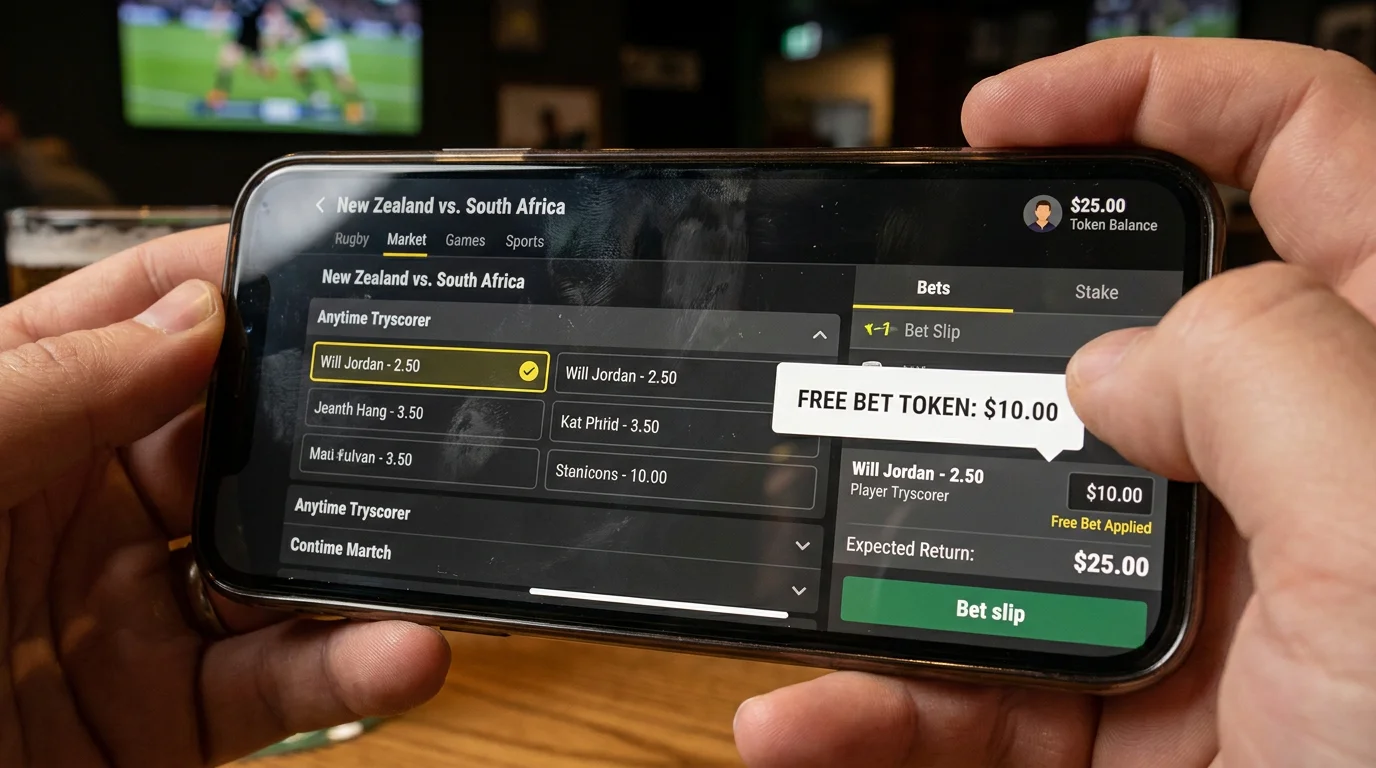
Where to use your free bet matters. The mathematical optimal strategy is to use free bets on outcomes at the longest odds where you still believe there’s value. A stake-not-returned free bet at odds of 2.00 returns 10 pounds on a 20-pound token. The same token at odds of 5.00 returns 80 pounds. The expected value at longer odds is higher because the free bet’s “cost” (the non-returned stake) is fixed regardless of the odds. I use rugby free bets on first tryscorer or handicap selections at odds of 4.00 or higher whenever I have a defensible analytical view at those prices.
Timing matters too. Most free bet tokens expire within 7 to 30 days of being credited. I’ve lost count of the bettors I know who’ve claimed a free bet in the rugby off-season and watched it expire because there were no matches to bet on. The Six Nations window – which generated nearly 15 million ITVX streams across 10 matches in 2026 – is the optimal time to claim rugby-specific sign-up offers, because you’ll have high-quality fixtures available immediately to deploy your tokens.
Calculating the Real Return from Free Bet Promotions
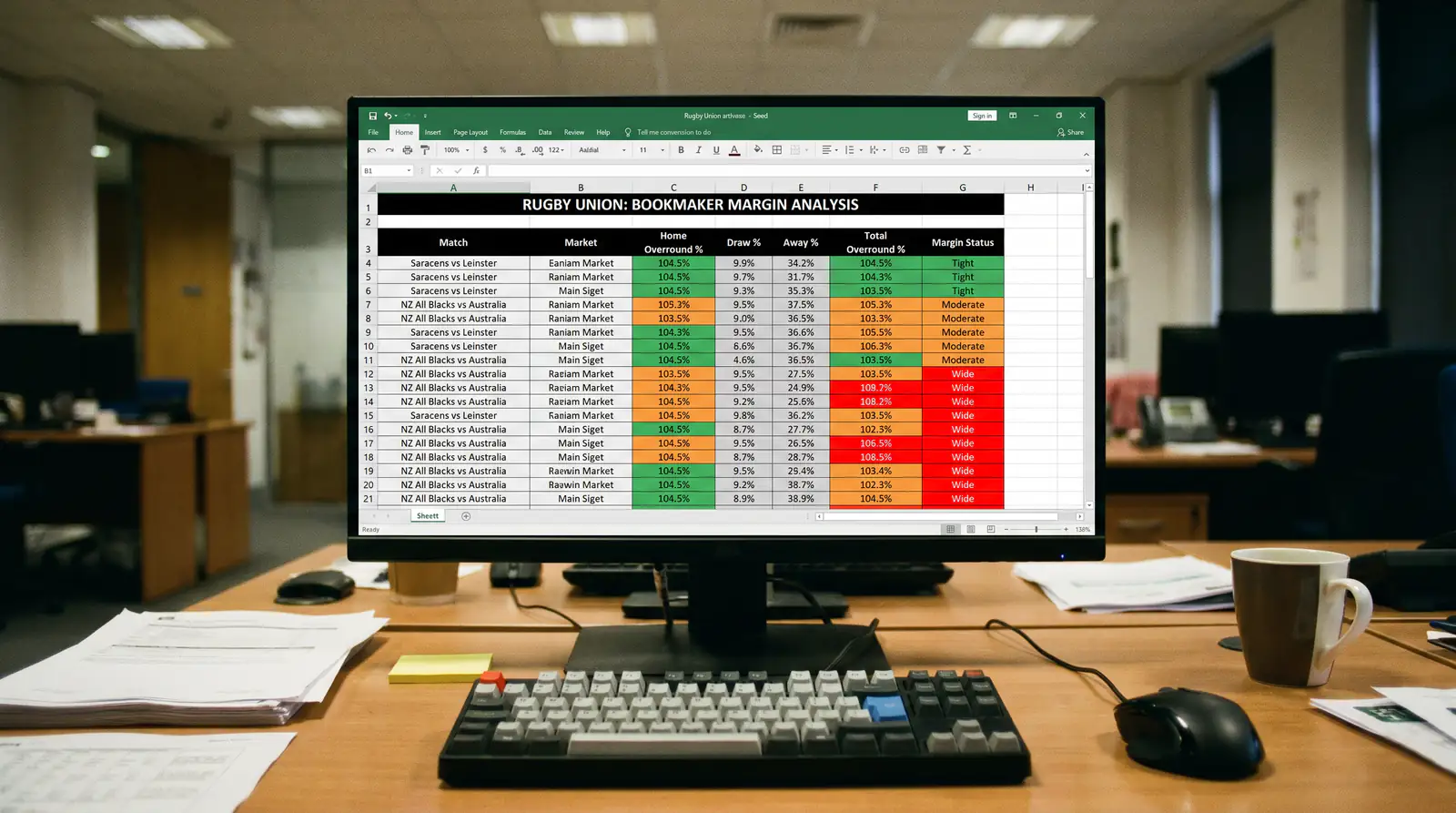
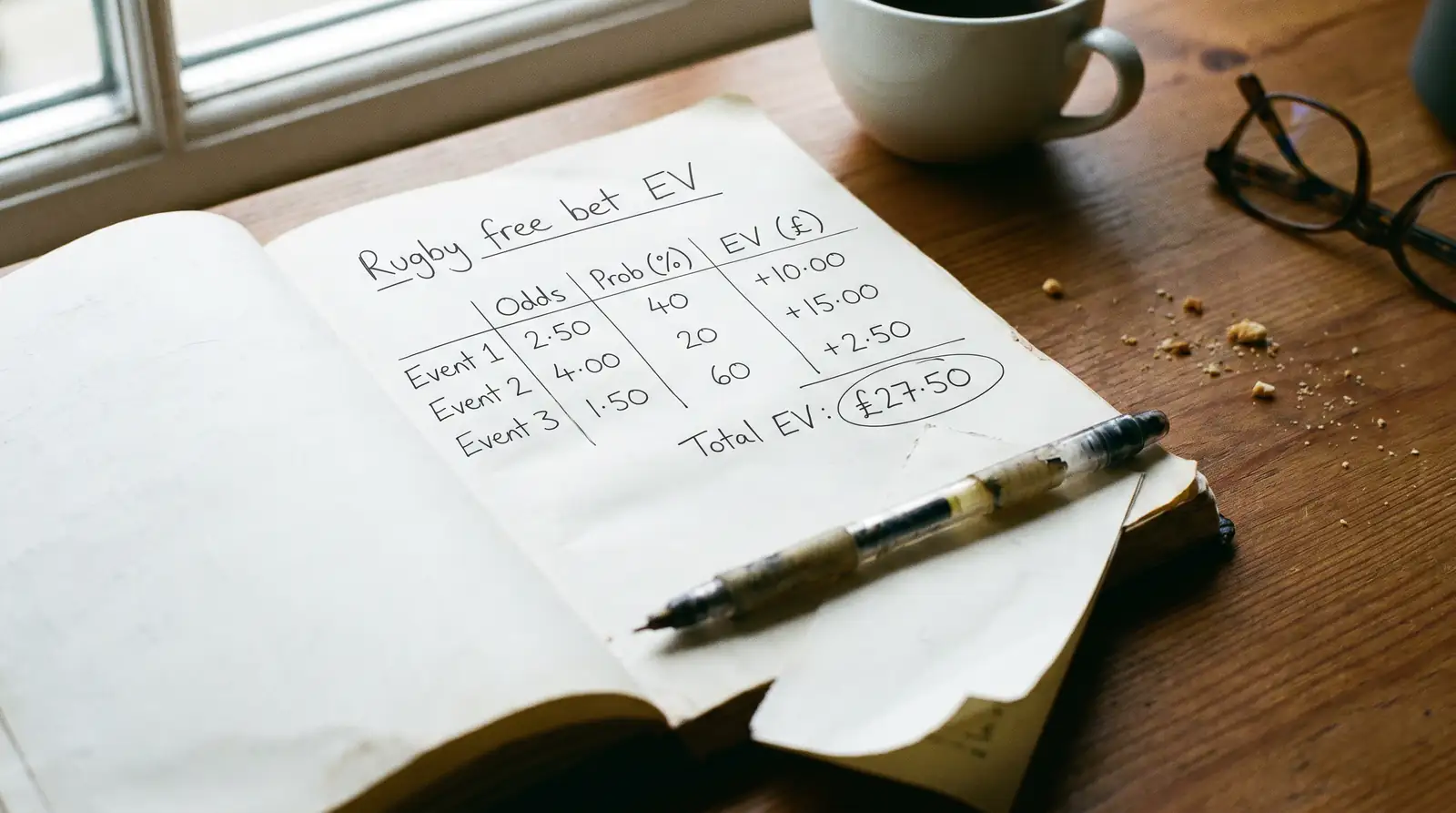
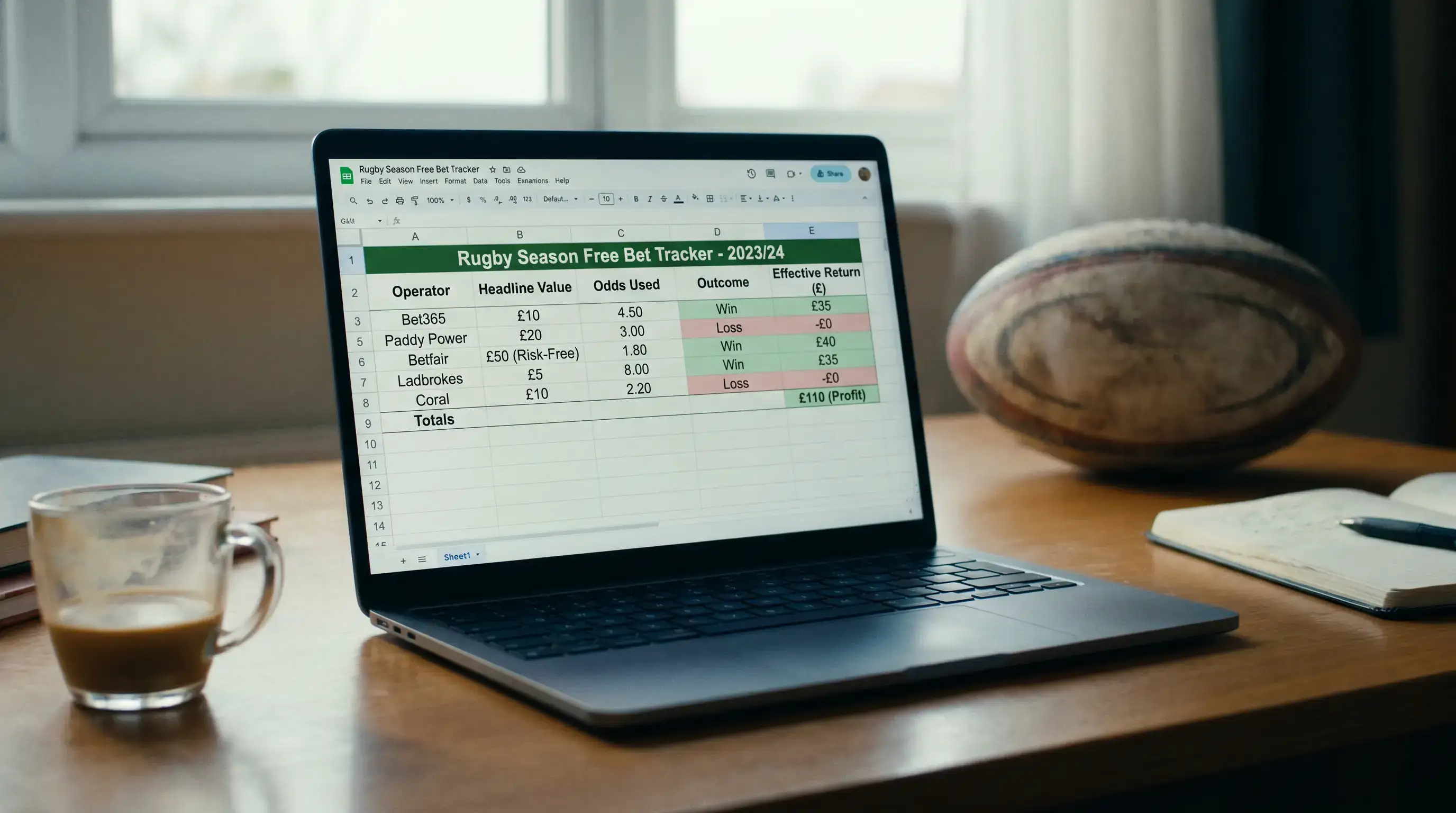
I keep a running spreadsheet of every free bet promotion I use across a season. The columns track: operator, headline value, token type (stake returned or not), odds used, outcome, actual profit, and effective percentage return. Across the 2025/26 rugby season, my average effective return on free bet promotions was 48% of headline value. That means a “30 pounds in free bets” offer translated to about 14.40 pounds in real value. Not nothing, but a long way from 30.
The calculation for any specific offer is straightforward. For a stake-not-returned free bet: real value = face value multiplied by (1 minus 1/average odds you’ll use). At average odds of 3.00, that’s face value multiplied by 0.667. At average odds of 2.00, it’s face value multiplied by 0.50. For a deposit match with wagering: real value = bonus amount minus (total wagering multiplied by average house edge). A 50-pound bonus with 5x wagering at 3% edge: 50 minus (250 multiplied by 0.03) = 50 minus 7.50 = 42.50 pounds.
The Remote Gaming Duty jump from 21% to 40% in April 2026 has tightened promotional budgets. The headline values on rugby free bet offers have been declining season on season, and the terms have become more restrictive – shorter expiry windows, higher minimum odds requirements, and tighter qualifying-bet conditions. I expect this trend to continue, which makes extracting maximum value from the remaining offers more important than ever.
Mistakes That Destroy Free Bet Value
The most expensive mistake is claiming a free bet offer and then changing your betting behaviour to meet the terms. If the qualifying bet requires a minimum odds of 2.00 and you wouldn’t normally bet at those odds on the available fixture, you’re placing a negative-expected-value qualifying bet to earn a free bet that’s worth less than the expected loss on the qualifier. I’ve seen bettors lose 15 pounds on a forced qualifying bet to earn a free bet worth 10 pounds. The promotion cost them money.
The second mistake is using free bets at short odds. A 20-pound free bet on a 1.20 favourite returns just 4 pounds if it wins. The same token at 4.00 returns 60 pounds. Yes, the longer-odds bet wins less often, but the expected value is still higher because the free bet’s non-returned stake represents a smaller proportion of the potential return. This is basic maths, but I see it violated constantly by bettors who feel “safer” backing heavy favourites with their free bets.
The third mistake is ignoring expiry dates. Set a calendar reminder the day you claim any free bet. The operators design short expiry windows precisely because a meaningful percentage of tokens go unused, which reduces their promotional cost. Don’t contribute to their savings – use the promotional calendar to time your claims around fixtures where you’ll have immediate opportunities to deploy the tokens at good odds.

How much is a rugby free bet actually worth?
A stake-not-returned free bet is worth approximately 50 to 65% of its face value, depending on the odds you use it at. A 20-pound free bet used at average odds of 2.50 has a real expected value of about 12 pounds. Stake-returned free bets are worth 75 to 85% of face value. Always calculate the real value before deciding whether the claiming process is worth your time.
When is the best time to claim rugby free bet offers?
The Six Nations in February-March offers the best combination of promotional generosity and fixture availability. Operators compete most aggressively for rugby customers during this window, and you will have high-profile matches available immediately to use your tokens. Avoid claiming during the off-season when fixtures are scarce and tokens risk expiring unused.
Written by the editors at Rugby Betting Sites.