Autumn Nations Betting: How to Approach the November International Window
 Available in US

November 2022 gave me my most profitable single weekend of rugby betting. England hosted New Zealand at Twickenham, and the pre-match odds had England as clear underdogs at 3.40. My model disagreed – I had England at roughly 38% win probability against the market’s implied 29%, based on New Zealand’s slow start to the autumn tour and England’s improved defensive structure under new coaching staff. England won 25-25… which was a draw, not a win, and my match-result bet lost anyway. But the handicap position I’d also taken at England +7.5 landed comfortably, and the experience crystallised why autumn internationals reward bettors who dig beyond the headline odds.
Why Autumn Internationals Produce Betting Opportunities
The November test window is structurally different from the Six Nations, and those structural differences create pricing inefficiencies that don’t exist in February and March. Southern-hemisphere teams arrive at the end of their domestic season, often with players carrying fatigue from Super Rugby and Rugby Championship campaigns. Northern-hemisphere teams are early in their Premiership or URC seasons, with fresher legs but less cohesion than they’ll have by the Six Nations. That asymmetry in physical condition and tactical preparation is the primary source of value.
The bookmakers know about this asymmetry in theory, but pricing it accurately is difficult. How much is All Blacks travel fatigue worth in handicap terms? Is it 2 points, 4 points, or 6? The answer varies by fixture, by squad selection, and by which week of the tour the match falls in. Teams that play three tests in three consecutive Saturdays typically perform best in the first fixture and worst in the third, and the live odds don’t always degrade the touring side’s price sufficiently across the window.

The second source of value is tactical uncertainty. November is when coaches trial new combinations, introduce uncapped players, and experiment with game plans they’ll refine for the Six Nations. Those experiments produce unpredictable performances that the market – calibrated to each team’s most recent competitive form – misprices. A coaching staff testing a new defensive structure might concede more points than their ranking suggests, pushing the total over. A team introducing a new first-five who favours territory kicking over running rugby might compress the scoring, pushing the total under.

Key Markets for the November Window
Match-result odds during the autumn attract significant public money, particularly on the home nations. England at Twickenham, Ireland at the Aviva, Wales at the Principality, and Scotland at Murrayfield all carry a “home support premium” in the odds – the public backs the home side more heavily than analytical models suggest, which can shorten the home price and lengthen the away price beyond fair value. Over the past five November windows, I’ve found consistent value on the touring side in match-result markets when the handicap line suggests a margin of 7 points or fewer.
Handicap markets are where I concentrate my autumn international staking. The lines on November tests are typically set 1 to 3 points tighter than equivalent Six Nations fixtures, reflecting the competitive uncertainty. Global rugby betting turnover exceeded 600 million euros in 2023, and a meaningful slice of that turnover flows through the autumn window. The tighter lines mean your analysis doesn’t need to be dramatically different from the market’s to identify value – a 2-point disagreement on a 5.5-point handicap line is a meaningful edge.
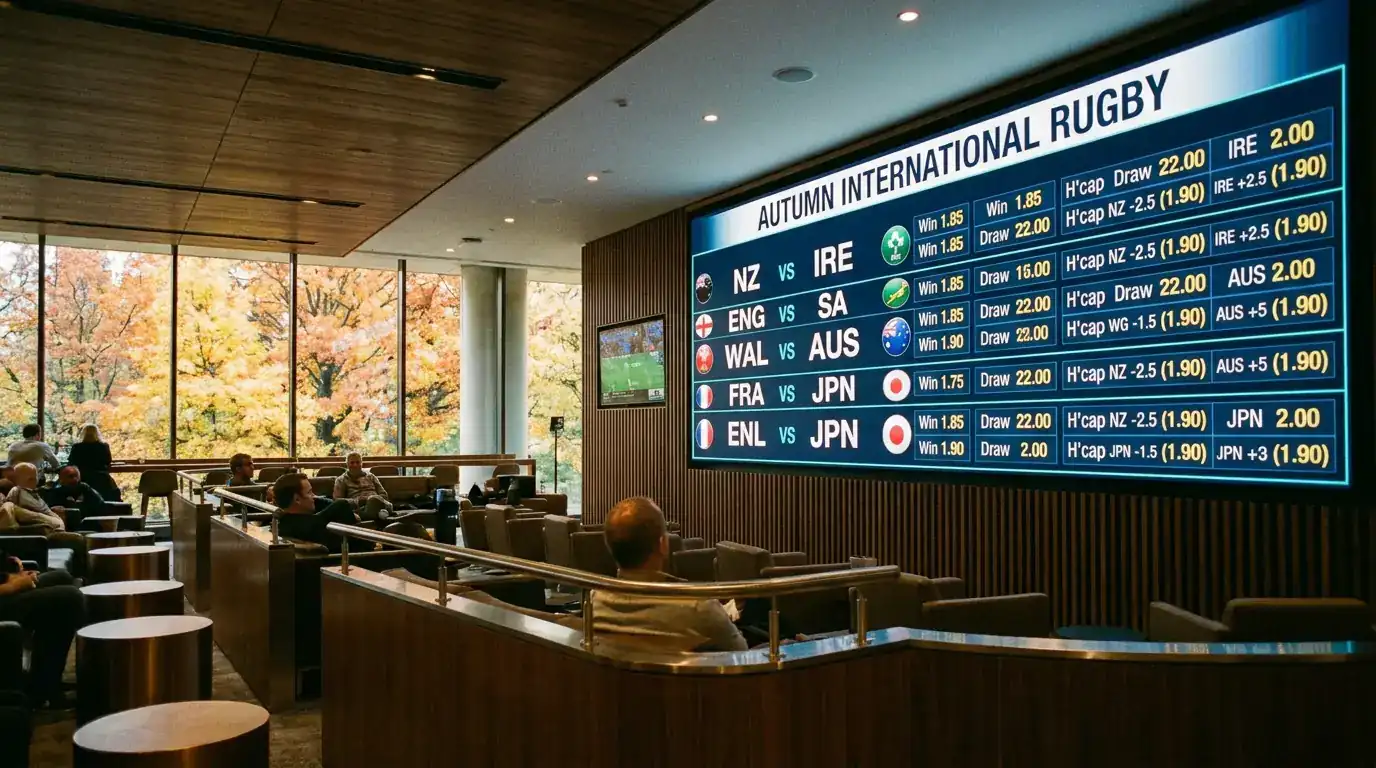
Total points markets during the autumn sit higher on average than the Six Nations equivalent for the same matchup. The reasoning is sound – less cohesive defences and experimental lineups produce more tries – but the market tends to overshoot. In my tracking of autumn internationals since 2019, the under has hit at a rate of 54% on total-points markets where the line exceeded 45.5. The experimenting doesn’t always produce points; sometimes it produces errors that lead to turnover-heavy, stop-start matches with compressed scoring.
Tour Fatigue and Squad Rotation: Reading the Team Sheets
I check team announcements on Tuesday (for Saturday fixtures) and Thursday (for final confirmation) with specific attention to touring-team rotation. A southern-hemisphere coach who makes five or more changes between the first and second test of a three-match tour is signalling fatigue management, and the replacement players are often a step below the first-choice XV in cohesion if not in individual talent. That cohesion gap matters more in the set piece and defensive structure than in open play, so I weight my handicap assessment toward the more structured aspects of the game.
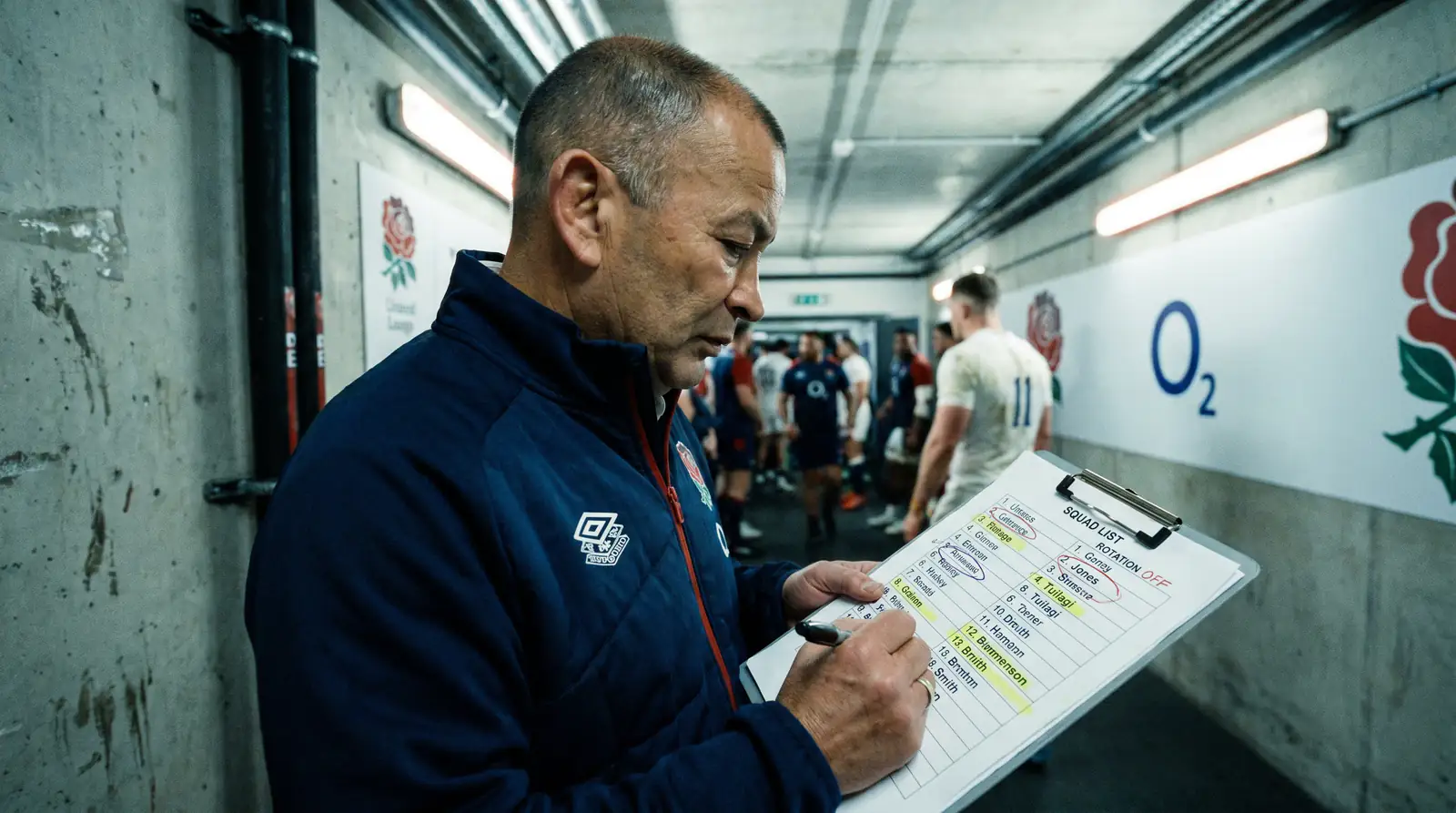
Home-team selection during the autumn internationals tells a different story. Coaches under pressure will pick their strongest available XV; coaches in a secure position will experiment. Reading the political context around selection – who’s fighting for their job, who has a mandate to develop players – helps you interpret the team sheet correctly. A coach experimenting isn’t necessarily fielding a weaker team; they’re fielding a less predictable one, and the market’s response to unfamiliar names in the starting XV often overestimates the negative impact.

The Premiership’s TNT Sports broadcast deal – worth approximately 200 million pounds over five years – ensures that the domestic competition runs concurrently with the autumn window, creating club-versus-country tension over player availability. Top Premiership players released for international duty often carry heavier training loads than their domestically rested teammates, and tracking which players featured in the preceding Premiership round helps gauge fatigue risk. A fly-half who played 80 minutes on the Saturday before an international Thursday squad announcement is a different proposition from one who was rested.
The autumn window rewards preparation and punishes assumptions. If you’ve been developing your in-play approach during the domestic season, November is where you apply it to a higher-stakes environment with wider pricing gaps. The structural inefficiencies are real, and they recur every year because the fundamental asymmetry – end-of-season tourists versus early-season hosts – is baked into the rugby calendar.
When are the autumn international rugby matches played?
The November international window runs across three consecutive Saturdays, typically the first three weekends of the month. Home nations (England, Ireland, Scotland, Wales, France, Italy) host touring sides from the southern hemisphere (New Zealand, South Africa, Australia, Argentina, Fiji, Samoa, Tonga). Some fixtures are also played on non-Saturday dates depending on broadcast schedules.
Do southern-hemisphere teams underperform in November internationals?
Not universally, but touring-team fatigue is a measurable factor. Teams at the end of long domestic seasons and Rugby Championship campaigns often perform below their peak level, particularly in the second and third tests of a three-match tour. The betting market accounts for this but tends to underprice the fatigue effect in the later fixtures, creating value on home-nation handicap positions.
Created by the ”Rugby Betting Sites” editorial team.