Best Rugby League Betting Sites: Super League, Challenge Cup and NRL Markets Compared
 Available in US
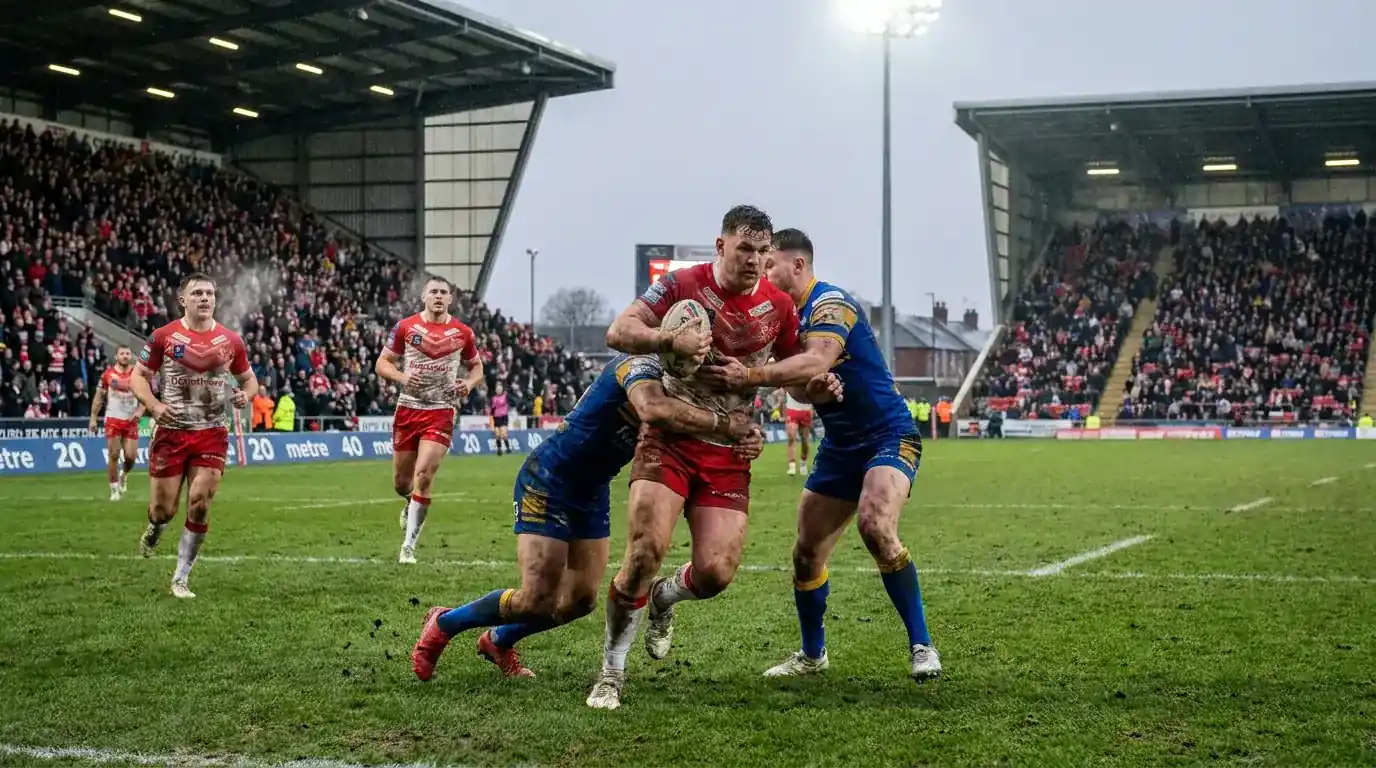
Rugby league moves fast. Thirteen players a side, four tackles to make ground, a mandatory handover on the fifth – and a scoring system built around tries worth four points that produces higher totals, bigger handicap swings and a tempo that union simply does not match. I started tracking league betting markets seriously in 2017, when the Super League was still a 12-team competition with a broadcast deal that felt like it was barely keeping the lights on. The sport in 2026 looks nothing like that.
Super League has expanded to 14 clubs this season, the TV contract with Sky Sports is entering its final year before renegotiation, and the non-racing betting segment that includes league generated 5.05 billion pounds in UK revenue during 2024. League is not a niche product – it is a core part of the British betting calendar, with a domestic season that runs from February to October and an NRL schedule that fills the overnight hours for punters willing to stay up or set early alarms.
What I want to lay out here is how to evaluate the operators serving league bettors specifically. The priorities differ from union in ways that matter: handicap pricing takes precedence over tryscorer depth, NRL coverage separates the serious platforms from the token ones, and the relationship between the league’s title sponsor and the betting market creates dynamics you will not find in any other UK sport.
Table of Contents
Rugby League in 2026: Expansion, New TV Deals and Betting Implications
The 2025 Super League Grand Final at Old Trafford drew 68,853 spectators – a number that should settle any debate about whether league has the audience to sustain deep betting markets. It does. The expansion from 12 to 14 teams in 2026 adds two more fixtures per round, extends the fixture calendar and creates matchups between established clubs and newer entrants that bookmakers find genuinely hard to price.

More teams means more uncertainty, and more uncertainty means wider spreads in the handicap markets that dominate league wagering. When the 12-team format produced a fixture between a top-four side and a cellar-dweller, the handicap line was often so large – 20 points or more – that it became a binary proposition with thin value. A 14-team league dilutes that dynamic. There are more competitive mid-table matchups, more scope for upsets and more opportunities for the handicap market to get things wrong.
The broadcast situation adds another layer of consequence. Sky Sports’ current Super League deal expires at the end of 2026, and whatever replaces it will reshape how the sport is consumed – and therefore how it is bet on. If the next deal shifts more games to free-to-air or adds a streaming component, the live-betting audience could expand significantly. If it remains behind a paywall, the audience stays concentrated among the existing subscriber base, and betting volumes stay roughly where they are.
Then there is the Betfred dimension. Fred Done, the owner of Betfred, has been the title sponsor of Super League since 2017. When the most recent three-year extension was announced covering 2024 to 2026, it represented a 25% increase on the previous deal. Done himself said the real passion for the game shown by the players, the media and the fans was the main reason the sponsorship had proved to be so strong. That kind of long-term investment from a bookmaker is not just a branding exercise – it shapes how that operator approaches league betting markets, which I will unpack in a dedicated section below.
Top Rugby League Betting Sites Reviewed
I once placed a handicap bet on a Super League match where the line differed by six full points between two operators. Six points in league is the difference between a comfortable cover and a losing bet. That experience taught me something I now take as gospel: league bettors who do not shop lines are donating money to bookmakers.
The operators I track for league fall into three loose categories. The first group treats league as a primary sport – these are typically UK-heritage bookmakers with strong northern-England customer bases, where league is culturally embedded. They tend to offer the widest range of league-specific markets, the earliest odds releases and the most granular handicap options. Their margins on Super League fixtures are often as tight as what you see on Premier League football, because they know their customer base will punish lazy pricing by going elsewhere.
The second group is the large international operators that cover league as part of a broad multi-sport offering. These platforms generally have strong technology – good apps, fast live interfaces, reliable cash-out – but their league pricing can be formulaic. They will set a handicap line based on a statistical model that accounts for league position and recent results, but they are less likely to adjust for league-specific factors like the mid-season loan window, a club’s travel schedule for away fixtures or the effect of Magic Weekend on squad rotation. If you are a casual league bettor, these platforms are perfectly functional. If you are looking for an edge on handicap markets, they are usually the operators you are betting against rather than with.
The third group covers league sporadically. They will offer match-result and basic handicap markets for Super League, might have a few Challenge Cup fixtures, and treat the NRL as an afterthought with delayed odds releases and skeletal market lists. These are not league betting sites in any meaningful sense, regardless of what they claim on their navigation pages.
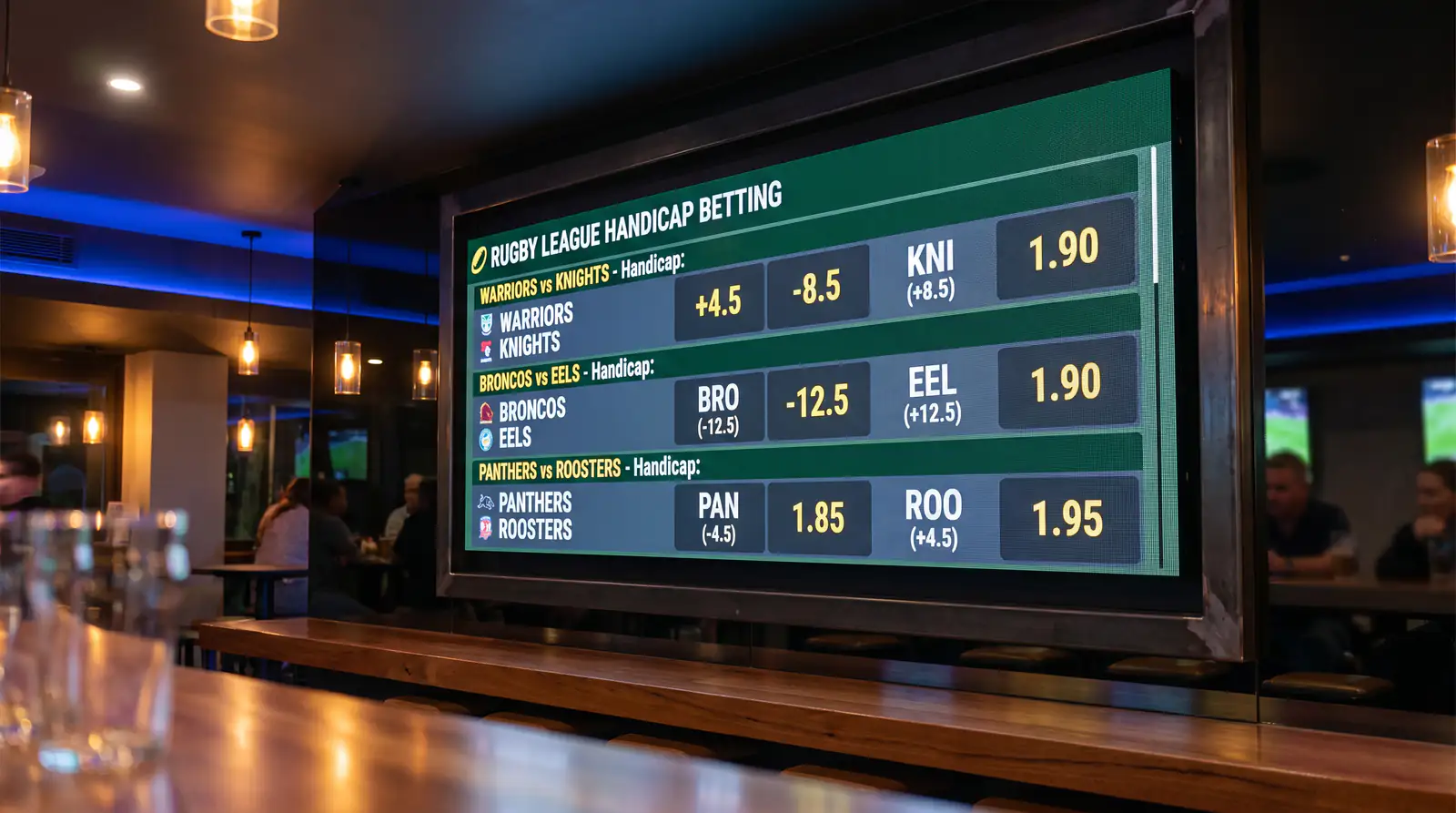
What I look for specifically in a league operator starts with handicap line variety. A strong league platform will offer not just the primary handicap but at least two or three alternative lines – for instance, a main line of -8.5 alongside alternatives at -4.5 and -12.5 – each with different odds. This gives you the ability to trade off certainty against payout, which is the core skill in league handicap betting. An operator that only offers the primary line is giving you a take-it-or-leave-it proposition, and that is not good enough for serious league punters.
Total-points markets are the second priority. League matches produce higher scores than union – typically between 30 and 55 total points in Super League – and the over/under line needs to reflect game-specific factors. I check whether an operator adjusts the line for conditions (a hot afternoon in Perpignan versus a rainy Thursday in Salford produces different games) and whether they offer alternative total lines alongside the primary one. Quarter-point totals and Asian totals, where half your stake goes on one line and half on an adjacent one, are tools that experienced league bettors use regularly, and not every platform provides them.
Player-prop markets in league are less mature than in union. Tryscorer markets are available on most platforms, but markets around individual tackle counts, metres gained or goal-kicking success are rare in league despite the sport’s statistical richness. This is an area where I expect to see growth over the next two to three years as data providers improve their league feeds, but for now, the selection is limited compared to what you might find for an NFL or NRL fixture.
Cash-out reliability matters more for league than for union simply because the sport’s faster pace means momentum swings happen more abruptly. A team can score three tries in eight minutes in league; that kind of swing makes mid-match cash-out timing genuinely consequential. I have had experiences where the cash-out offer lagged behind the on-field action by 30 seconds or more, which rendered it useless during the exact moments it was most needed. Testing cash-out responsiveness during live matches is something I do early in a season before committing to an operator for league in-play work.
Finally, app performance for league betting deserves specific attention. Super League fixtures are often scheduled for Thursday and Friday evenings when mobile usage peaks, and the NRL runs during Saturday and Sunday mornings UK time – prime mobile-browsing hours. An app that loads slowly, stutters during live updates or buries the rugby league section under three layers of navigation is costing you seconds that translate directly into worse prices on in-play markets.
Markets That Define Rugby League Betting
League betting markets reflect the sport’s structure: fewer players on the pitch, a faster play-the-ball, a mandatory possession change after five tackles and a scoring system where tries are worth four points and goals two. That structure produces games with higher try counts, more predictable possession patterns and handicap lines that are the central market rather than a secondary option.
Match result is where most casual bettors start, but the win-draw-loss market in league carries a structural quirk that union does not share: draws are genuinely rare. Over the past five Super League seasons, fewer than 3% of regular-season matches have ended level. That means the bookmaker’s draw price is essentially dead money in most fixtures, and the effective market is a two-way proposition between home and away. Some operators offer a “draw no bet” option that removes the draw entirely, and for league, this often represents better value than the standard three-way market because you are not paying for an outcome that almost never happens.
Tryscorer markets in league are priced differently from union because positional scoring patterns differ. In union, wingers and full-backs dominate the try charts; in league, centres, second-rowers and even hookers from dummy-half score regularly. The bookmaker’s model tends to weight recent try-scoring form heavily, which means a player on a hot streak gets shortened aggressively while a player who has gone three games without a try drifts out – often beyond what the underlying probability justifies. I find the best value in backing players whose try drought is a function of game situation (their team has been losing and defending for extended periods) rather than personal form.
Why Handicap Lines Dominate League Wagering
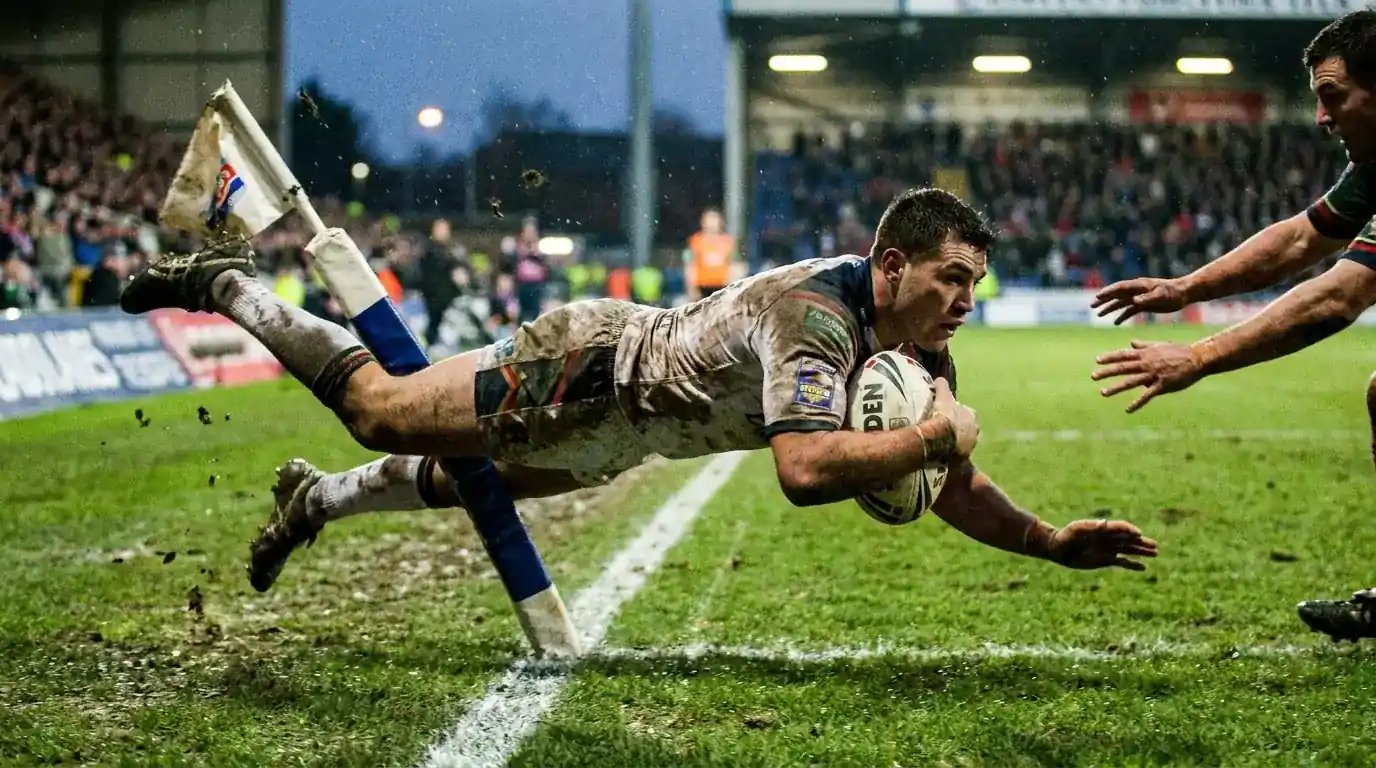
There is a reason handicap betting dominates league in a way it does not dominate union: the nature of league scoring makes blowouts more common. When a dominant pack controls the ruck and a halfback combination can kick to the corners with precision, tries come in clusters. A 12-0 lead can become 30-0 inside fifteen minutes, which means the match-result market is effectively dead by half-time in a significant minority of fixtures. The handicap market absorbs that dynamic by setting a spread that asks whether the dominant team wins by enough to cover.
What makes league handicaps particularly interesting for bettors is the role of fatigue in the final 20 minutes. League is physically brutal – 13 players covering the same ground as 15 in union, with limited interchanges from the bench. Fatigue compounds in the last quarter, and trailing teams often concede soft tries that blow out the final margin well beyond what the first 60 minutes suggested. If you are backing a favourite on the handicap, those late tries are your friend. If you are backing the underdog to cover, you need to factor in whether they have the bench depth to stay competitive when legs tire.
Line movement in league handicaps is driven more by team news than by public money. When a key halfback or fullback is ruled out on the morning of a Super League match, the handicap line can shift by four to six points in a matter of hours. The window between team-sheet confirmation and kick-off is the period when informed bettors capture the most value, because the bookmaker’s model adjusts based on the player’s market weighting, but it does not always account for the specific tactical role that player fills. A second-choice halfback might be a competent replacement statistically, but if he lacks the kicking game to control field position, the impact on the match shape – and therefore the handicap – is larger than the model recognises.

Super League vs NRL: Coverage Differences Among UK Bookmakers
If you only bet on Super League, you are missing half the league calendar. The NRL season in Australia runs from March to October, with matches kicking off at times that translate to Saturday and Sunday mornings in the UK. For a league bettor, that means a near-continuous fixture schedule – Super League on Thursday/Friday evenings, NRL on weekend mornings – with opportunities to apply the same analytical framework across two competitions.
The problem is that UK bookmaker coverage of the NRL varies wildly. A handful of operators treat the NRL as a first-class sport, offering full handicap lines with alternatives, total-points markets, tryscorer options and live in-play pricing from the first whistle. Others provide the bare minimum – a match-result price and a single handicap line posted hours before kick-off, with no in-play coverage once the game starts. The gap between these two experiences is larger than the gap between the best and worst Super League coverage, because NRL is treated as a foreign competition by operators that lack an Australian customer base, while operators with Australian heritage or licensing treat it as a core product.

For a detailed look at how Super League betting sites handle the expanded 14-team format, I have written a separate analysis. But the key difference between Super League and NRL coverage among UK operators comes down to data latency. NRL matches are priced off Australian data feeds, and some UK operators experience a slight delay in updating their odds compared with Australian-based sportsbooks. That delay is usually measured in seconds rather than minutes, but for in-play handicap bets where the line is moving on every set of six, even a few seconds of lag can mean the difference between getting the price you want and watching it disappear.
Challenge Cup and international league fixtures sit between Super League and NRL in terms of coverage quality. The Challenge Cup final and semi-finals attract near-full market depth, but early rounds – particularly when lower-league clubs are involved – get minimal attention from most operators. International league matches, including the Pacific Championships and the Ashes series, are covered intermittently and priced with wider margins, which reflects both the lower betting volumes and the difficulty of modelling international league fixtures where squad composition changes dramatically from club season to international duty.
The Betfred Factor: How Title Sponsorship Shapes League Betting
No other British sport has a bookmaker as its title sponsor in the way Super League has Betfred. The arrangement, running since 2017 with the most recent extension covering 2024 to 2026, creates a dynamic that league bettors need to understand because it affects market behaviour in subtle but measurable ways.
A title sponsor has commercial incentives that go beyond brand visibility. Betfred’s association with Super League means the operator has a reputational stake in the competition’s integrity, its audience growth and its cultural prominence in the UK’s northern heartlands. That stake translates into deeper market coverage for Super League fixtures on Betfred’s platform compared with competitions where the operator has no sponsorship involvement. The logic is straightforward: if your brand name is literally on the competition, you cannot afford to offer thinner markets or wider margins than your competitors. The reverse is also true – other operators do not have the same reputational incentive to match Betfred’s depth on Super League, which means the competitive landscape is slightly tilted.
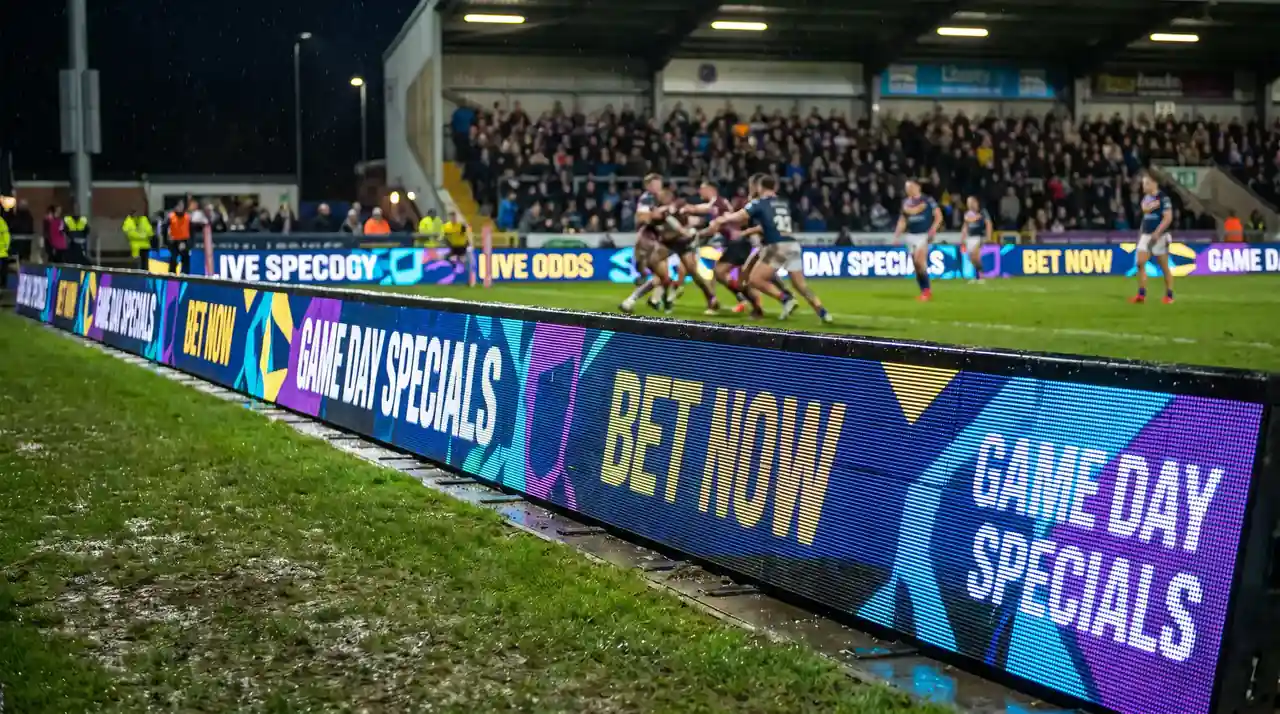
Does title sponsorship translate into better odds? Not necessarily, and not consistently. My tracking over the past three seasons shows that Betfred’s match-result margins on Super League fixtures are competitive but not market-leading. Where the sponsorship effect shows up more clearly is in market variety – Betfred typically offers a wider selection of specials, bet-builder combinations and match-specific promotions for Super League than operators without a sponsorship stake. If you are a punter who values market breadth and league-specific promotions over raw odds sharpness, that matters.
The sponsorship also raises a question about the future. Betfred’s current deal expires at the end of the 2026 season, coinciding with the Sky Sports broadcast contract. If the sponsorship is renewed, the dynamic persists. If a different bookmaker steps in – or if the league moves away from betting sponsorship entirely, following the path that other sports have explored – the market landscape for league betting could shift in ways that benefit or disadvantage punters depending on which operator takes over and how seriously it treats the competition.
Frequently Asked Questions
Is Super League betting as popular as Premiership rugby betting?
In terms of raw betting volumes, Premiership rugby union attracts more total handle because its international windows – especially the Six Nations – drive massive spikes in activity. Super League betting is more consistent week to week across its February-to-October season but does not match the peaks that union’s major tournaments generate. The 2025 Grand Final’s 68,853 attendance shows the audience is there; the betting volumes follow that interest most heavily during the play-off rounds and the Challenge Cup final.
Can I bet on NRL matches at UK rugby league betting sites?
Yes, but coverage quality varies enormously. Some UK operators treat the NRL as a first-class product with full handicap alternatives, tryscorer markets and live in-play pricing. Others offer only basic match-result and main-line handicap markets with delayed odds releases. If NRL betting is a priority, check whether your chosen operator provides in-play coverage for Australian kick-off times, as that separates the serious platforms from the token offerings.
What makes rugby league handicap lines different from union?
League’s faster scoring rate and higher average total points produce larger handicap spreads. A 20-point line is common in league when a top-four side faces a bottom-half club; equivalent fixtures in union rarely see spreads beyond 14 points. League handicaps also move more sharply on team news – particularly the loss of a halfback or fullback – because 13-player squads with limited interchange have less capacity to absorb the absence of a key playmaker.
How does Super League expansion to 14 teams affect betting markets?
Two additional clubs create more fixtures per round and introduce matchups that lack historical data, making it harder for bookmakers to set accurate handicap lines. The expansion also compresses the quality gap between mid-table sides, producing more competitive matches in that range and reducing the number of heavy-favourite fixtures where the handicap line is so large it becomes a coin flip. For bettors, the transition season is likely to produce more mispriced fixtures than a settled 12-team format.
Written by the editors at Rugby Betting Sites.